
Fabric stores and online clothing shops present customers with numerous fabric name options from their physical store displays and their internet product listings. The list of fabrics begins with cotton and extends to denim satin and jersey and chiffon and tweed and fleece and other materials. The secret of fabric existence reveals itself through the combination of fibers with their respective weaving methods and knitting techniques and manufacturing processes. This explains the difference between the velvet touch of cotton velvet and the fabric texture of quilting cotton and the different behavior of denim compared to chambray despite their initial visual similarity.
All people who want to understand fabric types should study this knowledge because it benefits their shopping experience and their sewing skills and their selection of materials for making clothes and furniture and home decoration. The guide provides information about common fabric types which includes details about their materials and construction methods and typical usage areas. All content here uses established textile definitions which people can understand through simple yet friendly explanations.
The article examines the most common fabric names which people need to know for shopping and sewing and studying textiles. The term fiber refers to the basic material which includes cotton and nylon while the term fabric describes the combination of fiber with a particular weaving pattern or knitting style or construction method to create fabrics like denim and satin.
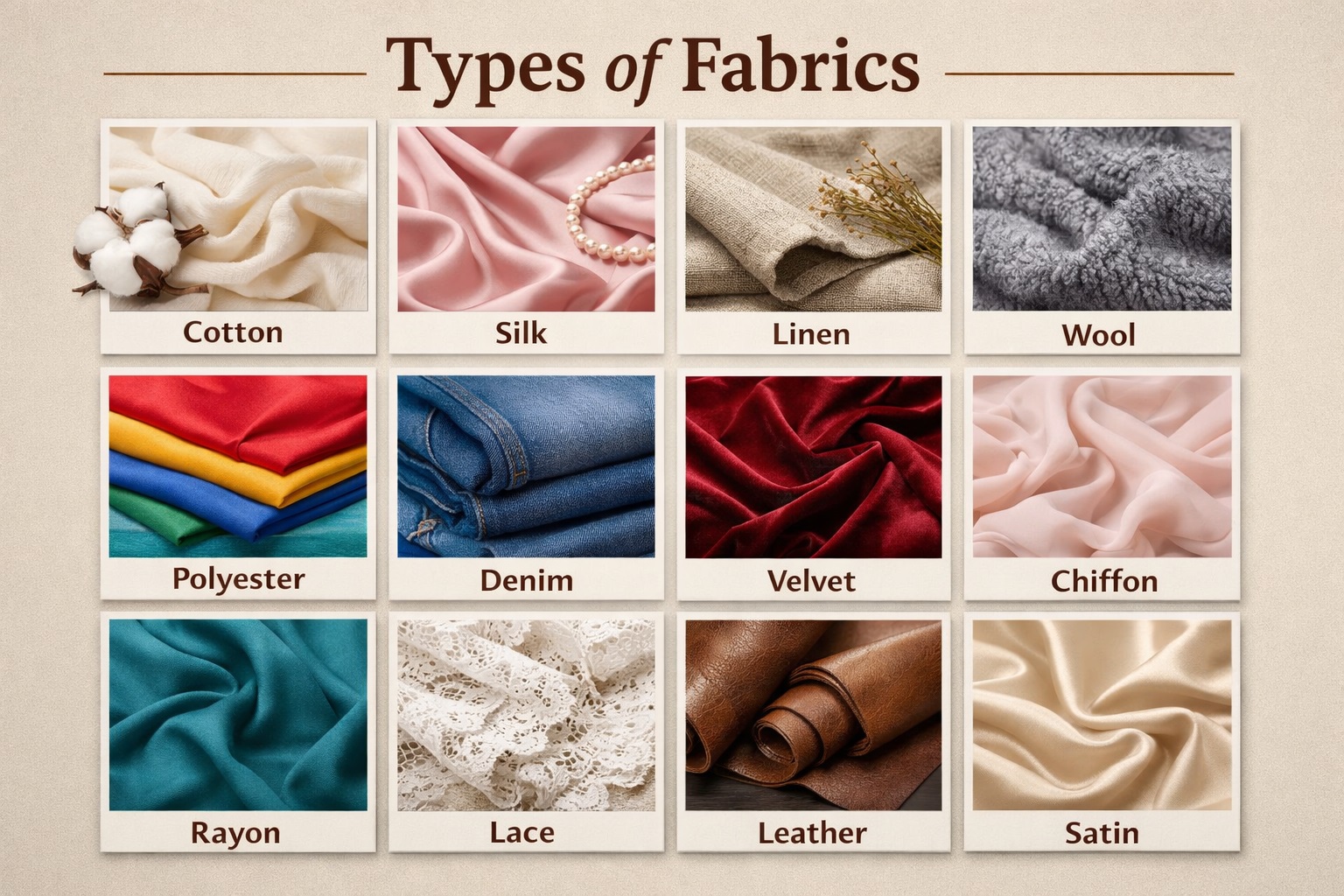
The document provides an alphabetical and serial list of fabric types which shows their actual fabric characteristics and their typical applications.
A
1. Acrylic
This synthetic fiber originates from petroleum and coal-derived chemicals to create a material that resembles wool.
The material serves various applications through its use in sweaters and blankets and upholstery and carpets.
B
2. Batik
The fabric uses a wax-resist dyeing process which requires wax application before dyeing to create multiple pattern layers.
The material serves various applications through its use in clothing and curtains and tablecloths and bedspreads.
3. Batiste
The fabric offers a smooth lightweight texture which maintains a soft and dense appearance.
The material serves various applications through its use in bedsheets and blouses and embroidery bases.
4. Bengaline
The fabric features a crosswise rib texture which results from using thicker weft yarns.
The material serves various applications through its use in dresses and skirts and pants and upholstery.
5. Boucle
The fabric creates a textured appearance through its construction from looped yarns that have different sizes.
The material serves various applications through its use in coats and jackets and throw pillows.
6. Broadcloth
The fabric consists of a tightly woven plain-weave cotton material which produces a smooth and durable fabric.
The material serves various applications through its use in shirts and dresses and table linens.
7. Brocade
The fabric displays decorative woven designs which develop raised patterns through a weaving process that does not use printing.
The material serves various applications through its use in formalwear and upholstery and drapes.
8. Broderie Anglaise (Eyelet)
The cotton fabric features embroidered cutouts which create lacy patterns through the use of eyelet embroidery.
The material serves various applications through its use in summer dresses and blouses and curtains.
How to Get Rust Out of Clothes: Fast, Safe Home Methods
C
9. Calico
The fabric remains in its natural state as undyed cotton which contains visible seed particles.
The material serves various applications through its use in practice garments and mock-up production.
10. Canvas
The fabric consists of a thick and strong plain-weave material.
The material serves various applications through its use in tents and bags and upholstery.
11. Challis
The fabric offers lightweight properties through its woven structure which produces a smooth drape.
The material serves various applications through its use in dresses and blouses and scarves.
12. Chambray
The fabric features a lightweight structure which handles colored yarns for its warp and white yarns for its weft.
The material serves various applications through its use in shirts and skirts and dresses.
13. Charmeuse
The fabric features a satin-weave design which produces a shiny front side and flexible back side.
The fabric serves its purpose through its application to create dresses and lingerie and pillowcases.
14. Chenille
The fabric consists of a soft material which designers create from fuzzy yarn.
The material serves various applications through its use in blankets and upholstery.
15. Chiffon
The fabric consists of a lightweight sheer material which produces a soft flowing drape.
The material serves its purpose through its application to create formal gowns.
16. Chino (Drill)
The fabric produced through twill weaving creates a textile which displays diagonal patterns.
The material serves as the foundation for production of pants and uniforms and slipcovers.
17. Chintz
The fabric made from cotton features block printing which applies floral patterns throughout its design.
The material serves as the foundation for production of upholstery and dresses and bedding.
18. Corduroy
The fabric creates a pile texture which displays vertical ribs known as wales.
The material serves as the foundation for production of pants and jackets and cushions.
19. Crepe
The fabric develops its textured design through the process of yarn over-twisting which results in springy drape.
The material serves as the foundation for production of dresses and blouses and skirts.
20. Crepe de Chine
The fabric presents a lightweight crepe texture which creates a delicate feel.
The material serves as the foundation for production of dresses and scarves and lingerie.
D
21. Damask
The fabric displays two-sided patterns which emerge through its reversible weaving technique.
The material serves as the foundation for production of upholstery and curtains and formalwear.
22. Denim
The fabric combines two different weave patterns to create a strong material which uses blue threads for warp and white threads for weft.
The material serves as the foundation for production of jeans and jackets and upholstery.
23. Dobby
The fabric displays small geometric patterns which emerge through the operation of a dobby loom.
The material serves as the foundation for production of shirts and dresses and bedding.
24. Double Gauze
The weaving process creates two separate gauze layers which remain connected during the manufacturing process.
The material serves as the foundation for production of baby clothes and blankets and dresses.
25. Double Jersey (Interlock)
The fabric delivers a double-sided appearance through its construction as a thick knit material.
The material serves as the foundation for production of sweatshirts and activewear.
26. Duck
The heavy material resembles canvas because it uses basket weave construction to create its fabric.
The material serves as the foundation for production of workwear and aprons and outdoor cushions.
F
27. Faux Fur
The synthetic material creates an appearance which imitates real animal fur.
The material serves as the foundation for production of coats and accessories and throws.
28. Faux Leather
The synthetic material creates a leather-like appearance which includes a fabric backing.
The material serves as the foundation for production of jackets and bags and upholstery.
29. Felt
The non-woven fabric emerges through the process of compressing fibers to create a cohesive material.
The material serves as the foundation for production of crafts and hats and accessories.
30. Flannel
The fabric emerges through the weaving process which undergoes brushing to achieve a soft texture.
The material serves as the foundation for production of pajamas and shirts and bedding.
31. Fleece
The soft knit fabric made from polyester features a fuzzy surface texture.
The material serves as the foundation for production of jackets and blankets.
32. French Terry
The knit fabric displays a smooth front side while its back side shows looped material.
G
33. Gabardine
The fabric consists of tightly woven twill material which maintains its strength throughout its lifespan.
The material serves to create suits and trench coats.
34. Gauze
The fabric functions as a lightweight material that utilizes an open weaving technique.
The material serves to create dresses and medical bandages.
35. Georgette
The fabric consists of semi-transparent material which features a surface that has been intentionally crinkled.
The material serves to create dresses and scarves.
36. Gingham
The fabric functions as a checkered material which weaves together two distinct colors.
The material serves to create shirts and dresses and tablecloths.
37. Goretex
The fabric functions as a performance material which contains multiple layers that maintain waterproof and breathable properties.
The material serves to create rain jackets and outdoor gear.
H
38. Hemp
The natural fiber fabric originates from the stalk of the cannabis plant.
The material serves to create clothing and upholstery.
39. Herringbone
The twill pattern creates a V-shaped design through its specific weaving technique.
The material serves to create jackets and suits and cushions.
40. Hessian (Burlap)
The fabric consists of rough textured material which manufacturers create by weaving jute or similar natural fibers.
The material serves to create bags and ropes.
A Portfolio of Style: Decorating Tips with Floral Curtains
I
41. Interlock Jersey
The fabric consists of two knit layers which create a thickness that exceeds single jersey materials.
The material serves to create T-shirts and baby clothes.
J
42. Jacquard
The fabric exists as a woven textile which displays complex raised designs throughout its surface.
The material serves to create formal garments and upholstery.
43. Jersey (Single Knit)
The fabric functions as a stretchy knit material which displays knit patterns on one side and purl patterns on the other side.
The material serves to create T-shirts and sportswear.
44. Jute
The material functions as a rough natural fiber which people commonly refer to as burlap.
The material serves to create bags and rugs.
K
45. Khadi
The fabric exists as a hand-spun and handwoven cloth which manufacturers create using cotton silk or wool.
The material serves to create traditional garments and home textiles.
L
46. Lace
The fabric consists of decorative openwork material which displays woven patterns throughout its design.
The material serves to create bridal wear and tablecloths.
47. Lame
The fabric functions as a woven textile which contains metallic threads throughout its structure.
The material serves to create evening wear and décor.
48. Lawn
The fabric functions as a lightweight material which achieves a semi-transparent appearance while maintaining a crisp texture.
The material serves to create summer dresses.
49. Leather
The material functions as a durable substance which manufacturers create from processed animal hide.
The material serves to create jackets and shoes and upholstery.
50. Lyocell
The fiber originates from wood pulp which manufacturers process using a viscose production method.
The material serves to create shirts and bedding.
M
51. Mesh
The fabric makes use of a hole pattern to create its structure.
The fabric has applications in sportswear and curtain manufacturing.
52. Microfiber
The synthetic fiber exists as a thinner material that exceeds the thickness of silk strands while maintaining a soft and absorbent quality.
The material serves as a component in cleaning cloths and bedding products.
53. Minky
The fabric exists as a synthetic material that contains a plush texture which shows directional movement.
The fabric is used to make baby blankets.
54. Muslin
The fabric enables users to create mock-up designs and to produce lightweight clothing items through its plain-weave cotton construction.
The fabric serves to create toiles and baby clothing items.
Bedroom Bliss: 8 Creative Decor Ideas To Elevate Your Sleeping Space
N
55. Neoprene
The material consists of synthetic rubber which combines with fabric layers to create insulation and waterproof protection.
The material serves to make wetsuits and protective equipment.
56. Net
The term refers to any fabric that has an open-weave design and transparent nature.
The fabric serves as a component for creating veils and theatrical costumes.
57. Nylon
The synthetic fiber functions as a material for producing strong and long-lasting fabric.
The material serves to create swimwear and luggage products.
O
58. Oilcloth
The cotton fabric receives a waterproofing treatment through a coating process.
The material serves to create tablecloths and tote bags.
59. Organdie
The fabric exists as a crisp transparent material which designers create using either cotton or silk.
The fabric serves as a material for making formal dresses and curtains.
60. Organza
The fabric exists as a lightweight transparent material which designers use to create structured sheer designs.
The fabric serves as a material for making gowns and decorative items.
P
61. Pima Cotton
The long-staple cotton variety has gained recognition for its exceptional softness.
The material serves to create T-shirts and bedding sheets.
62. Plaid (Tartan)
The woven pattern consists of colored lines which intersect at various points to create its design.
The pattern works for making skirts and jackets and blankets.
63. Poplin
The fabric maintains a lightweight design through its plain-weave structure which gives it a sharp finish.
The material serves to create dress shirts.
Q
64. Quilting Cotton
The tightly woven cotton fabric features printed patterns which designers use to create quilts and structured garments.
R
65. Rib Knit
The stretchy knit design contains vertical ribs that enable stretchability.
The material serves to create cuffs and fitted clothing items.
66. Ripstop
The fabric uses a grid pattern as an internal reinforcement system which protects against tearing damage.
The material serves to create tents and jackets.
S
67. Sandwashed Fabric
The fabric becomes soft through abrasive treatment methods.
The fabric serves to create dresses and bedding items.
68. Sateen
The weave produces a surface that resembles smooth satin.
The material serves to make sheets and dresses.
69. Satin
The weave creates a shiny appearance through its floating thread design.
The material serves to make formal gowns.
70. Satin Crepe
The fabric displays a satin front while its back shows crepe texture.
The material serves as fabric for evening garments.
71. Seersucker
The fabric maintains a lightweight design through its puckered texture.
The material serves to create summer clothing items.
72. Sequins
The small decorative disks function as decorative elements which get sewn onto fabric.
The material serves to create costumes and evening wear.
73. Sherpa
The faux sheepskin fabric features a curly pile design.
The material serves as lining material for jackets.
74. Spandex (Lycra/Elastane)
The fiber provides stretchable properties which manufacturers use to make their fabrics.
The material serves to create activewear and swimwear products.
75. Suede
The material exists as brushed leather while its synthetic alternative provides soft texture.
The material serves to create shoes and jackets.
76. Supima Cotton
The American-grown cotton produces extra-long staple fibers.
The material serves to create apparel and bedding products.
T
77. Taffeta
The fabric maintains its shape through its crisp design.
The material serves to create ball gowns and curtains.
78. Tana Lawn
The cotton fabric displays fine weaving which enables it to drape smoothly.
The fabric serves to make blouses and dresses.
79. Terry Cloth
The fabric consists of looped cotton which absorbs water.
The material serves to make towels and bathrobes.
80. Ticking
The fabric consists of dense material which weavers create with tightly bound striped patterns.
The material serves to create mattress covers.
81. Tricot
The fabric material allows for warp knitting which prevents snagging.
The material serves to create lingerie and lining materials.
82. Tulle
The fabric consists of lightweight netting material.
The material serves to make veils and tutus.
83. Tweed
The durable fabric material consists of wool which displays a flecked pattern.
The material serves to create jackets and suits.
84. Twill
The weave creates a pattern which displays diagonal ribs.
The material serves to create pants and workwear.
V
85. Velvet
The fabric displays a plush appearance through its dense pile.
The material serves to create formalwear and upholstery products.
86. Velveteen
The fabric exists as a cotton version of velvet which has a shorter pile height.
The material serves to create décor elements and garments.
87. Velour
The fabric consists of a stretchy knit pile structure.
The fabric functions as a material for making loungewear.
88. Vinyl
The material functions as a synthetic leather alternative which uses PVC as its base component.
The material serves as a construction material for making bags and upholstery products.
89. Voile
The fabric functions as a lightweight material which provides semi-sheer drapey properties.
The fabric serves as a material for making blouses and curtains.
W
90. Waffle Knit
The fabric presents a knitted design which creates a grid pattern throughout its surface.
The fabric functions as a base material for making shirts and blankets.
91. Water-Resistant Fabric
The fabric undergoes treatment processes which enable it to either repel or resist water.
The fabric serves as a base material for making raincoats and tents and outdoor equipment.
Conclusion
The initial impression of fabrics becomes overwhelming until you learn essential elements which include fiber and construction materials. The alphabetical list includes all fabrics which range from acrylic to waffle knit and these fabrics display unique characteristics which define their visual appearance and tactile sensation and functional capabilities.
Denim poplin and twill serve as woven fabrics which deliver both structural support and long-lasting materials. Jersey and rib knit serve as knit fabrics which deliver both flexible movement and skin-friendly materials. Chiffon and organza serve as sheer fabrics which create sophisticated looks while velvet and tweed serve as textured materials which establish three-dimensional visual interest. Performance fabrics like Goretex and ripstop demonstrate that designers create textiles which serve both their practical purposes and their aesthetic needs.
Existing knowledge about fabric names and their applications enables you to make better decisions during clothing purchases and sewing project planning and upholstery material selection. The recognition of differences transforms fabrics from random labels into elements which reveal information about their quality and intended usage and design characteristics.
