
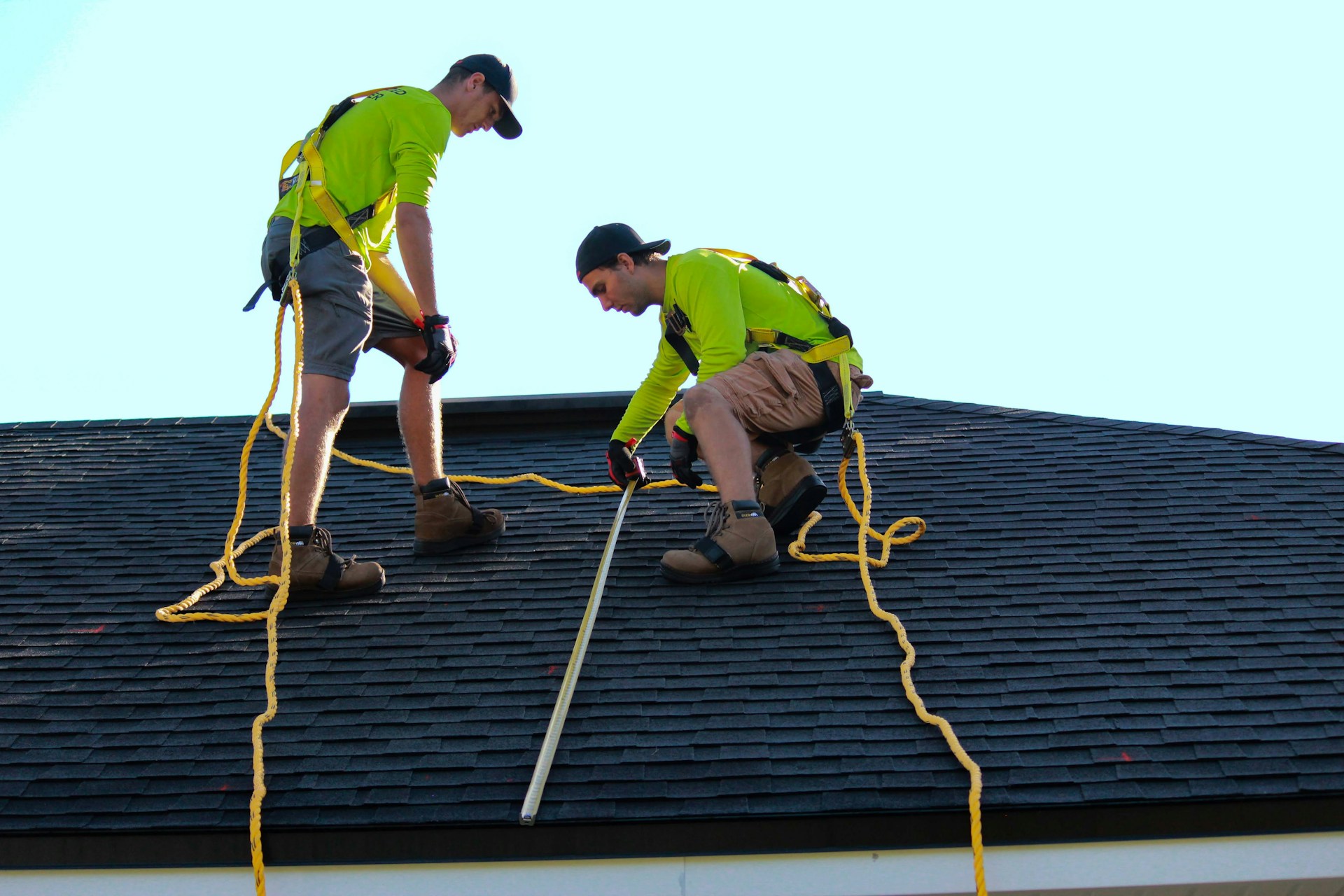
South Florida is no stranger to severe weather. The variety of climates here places roofs under a great deal of stress each year, from storms and hurricanes, sudden downpours, or warm showers. A storm rips through and leaves the roof damaged; the clock starts ticking immediately. Each hour that goes by without cover allows rain, moisture, and wind to continue battering the inside of a home, turning what could be an easy fix into costly permanent restoration.
What Roof Tarping Is and Why It Matters
Roof tarping is the application of waterproof, heavy-duty tarps tied down to exposed areas on a roof until permanent repairs can be made to the structural damage. Scoured shingles, holes, and tears in roofing felt, or vapor barriers, or only damaged tiles can also leave the inside of a home completely open to the elements. An installed tarp provides immediate protection by preventing rainwater from entering, which protects ceilings, insulation, walls, flooring, and personal possessions from more damage. Using roof tarping and repair services in the first few hours after storm damage is essential for homeowners looking to prevent further damage.
Tarping for a trailer, not all tarps are equal. Just like a Tarp that is improperly tied down or too short will move or blow off in the next gust, leaving the roof exposed again. Professional crews install weighted anchor systems, properly overlap materials, and use commercial-grade materials that stand up to the constant weather conditions here in South Florida. The Phoenix Restoration sends out experienced technicians who know how to properly secure tarps the first time, so that homeowners can rest assured their property is actually protected until repair work begins.
The South Florida Climate Makes Fast Response Non-Negotiable
Due to the heat, humidity, and abundance of rain that follow virtually every major storm event, much of the devastation from storms in South Florida is arguably even more dangerous. In arid areas, a roof that is damaged may not leak for several days; South Florida’s environment will eat it away in a day. Although your area temperature and humidity index, moisture entering by means of a roof breach can start the mildew-promoting process in twenty-four to forty-eight hours. Once mold gets into walls or insulation, it can become a real hassle and even costlier to remediate.
Another regular occurrence of Florida’s storm season is a secondary rain event, indicating that an unprepared roof will be the likely victim of further water incursion before permanent repair forces can mobilize. This is why the Phoenix Restoration has a twenty-four-hour emergency response, because in South Florida, waiting until the next business day is hardly ever an option! That means your team is ready to mobilize after a storm, assess damage, and install proper back tarping before the next weather system begins piling on their existing problems.
What Happens When Tarping Is Delayed
When it comes to storm roof damage homeowners experience a whole chain of side effects caused by the initial breach. Water that comes through a compromised roof soaks insulation, which loses its R-value and becomes food for mold and bacteria. Drywall and wood framing can suck up moisture very quickly, warping and softening those materials and eventually compromising the integrity of the structure if left unchecked for an extended time. A roofing problem that proposes a handful of costly repairs can swiftly turn into an all-in interior water damage restoration project within days.
Another key factor is insurance implications. Many homeowners insurance policies have a requirement for policyholders to mitigate damage in the aftermath of an insurable event. If the claim is not made promptly, insurers may have valid grounds to dispute aspects of a claim on the basis that more damage could have been avoided. Documenting the wind damage and utilizing a professional outfit such as The Phoenix Restoration to perform emergency tarping provides photographic evidence of appropriate, prompt action on your behalf that will strengthen your claim from beginning to end.
Choosing the Right Team for Emergency Roof Protection
Homeowners should seek vendors who are licensed and insured, but also experienced in storm response, particularly to conditions that can arise in South Florida. Restoring a storm is a craft that entails knowing local building codes and insurance documentation processes, as well as climate patterns that impact the region. Now, a general handyman or unlicensed contractor may offer you an attractive price from the get-go, but if they incorrectly tarp the roof and it fails in the next rain event, then it will cost much more to remedy than having someone do it right the first time.
The Phoenix Restoration employs licensed general contracting expertise in addition to their emergency restoration types of procedures, and this means that they literally can handle whatever the job entails, from the initial tarping to complete permanent structural repairs. Altan Homeowners in West Palm Beach, Boynton Beach, Lake Worth, and the greater South Florida area can experience efficient and reliable roof tarping and repair services after a storm with The Phoenix Restoration, which will arrive fast on the property, document all damages every step of the way, and protect customers as they go through their restoration process.
