
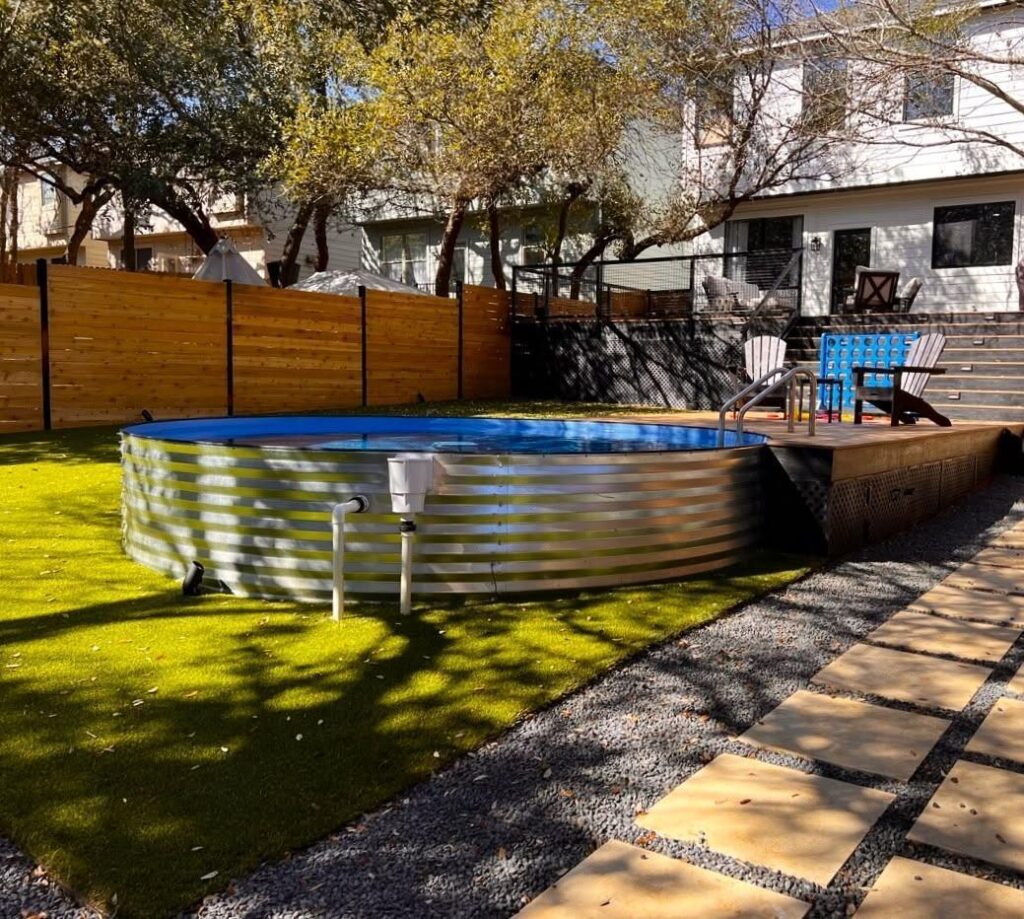
A round pool sitting on bare grass looks like a guest that hasn’t decided whether to stay. Add a deck, some planting, and a proper path from the house, and the same pool starts to look like part of the property instead of something that arrived on a truck. You don’t need to dig a full in-ground hole to get that effect. A few smart decisions about levels, materials, and plants do most of the work.
Why Landscaping Makes a Round Pool Look More Permanent
We judge permanence by edges. When a pool wall meets the lawn in a hard line, it looks temporary, because nothing around it was planned with the pool in mind. Once that edge is softened by stone, wood, or greenery, the pool looks anchored, as if the yard grew around it. Landscaping also gives the circle a context: a curved bed echoes its shape, a patio gives it a purpose, and a hedge gives it privacy. This works especially well with steel tank pools, since a galvanized shell is rigid enough to be partially buried or fully recessed. StainlessSwim builds round swimming pools from 9 to 21 feet across and manages the whole project, from excavation and leveling to plumbing and a custom deck, so the landscaping gets planned together with the pool instead of patched on afterward.
Using Decking to Integrate a Round Pool Into Your Backyard
A deck changes the look of a round pool faster than anything else. It hides the wall, creates a place to sit, and turns a freestanding object into an outdoor room. It also gives you somewhere to put loungers, a small table, or a shade umbrella, which makes the pool area feel lived-in rather than purely functional. Wood, composite, or stone can all work, as long as the material suits the house and the rest of the yard. The key is matching the deck height to how deep the pool sits in the ground, since that one decision shapes everything else, from the number of steps to how much wall stays visible.
Raised Decks Around Above-Ground Pools
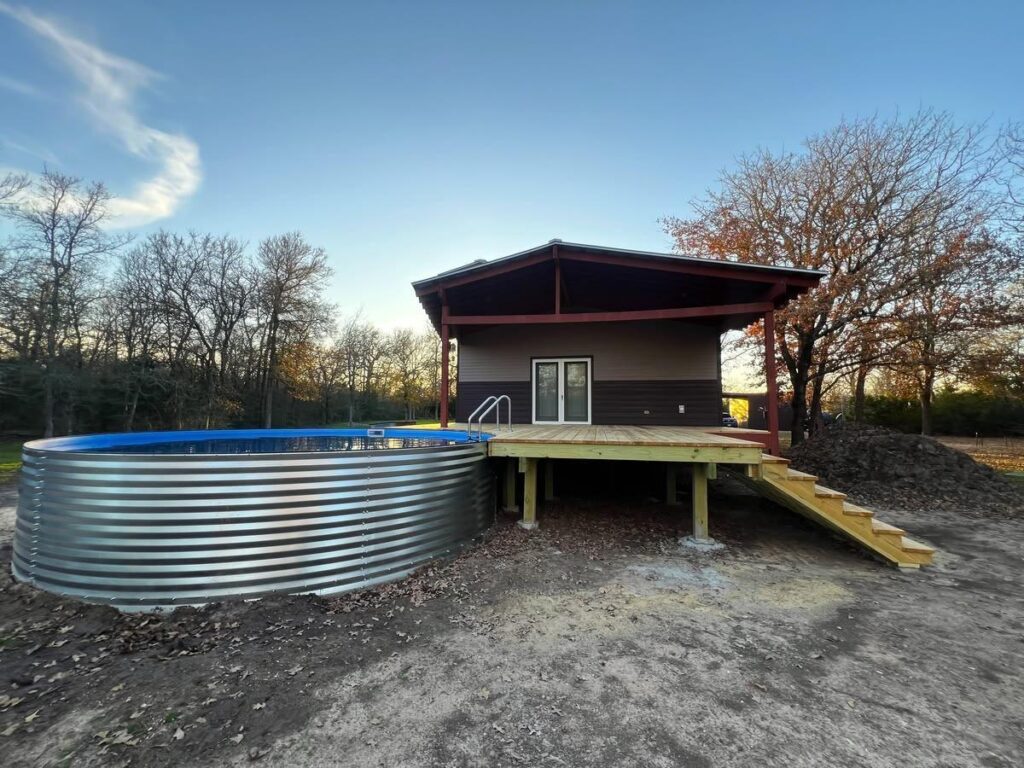
With a standard 46-inch wall fully above grade, a raised deck that wraps at least half the circle makes a big difference. Bring the deck surface a few inches below the rim so people can sit on the edge with their feet in the water. Composite boards in a warm tone usually blend in better than bright pressure-treated pine, and wide steps down to the lawn feel far more inviting than a ladder. If a full wrap is beyond your budget, a generous platform on the side facing the house still does the job.
Ground-Level Decks for Semi-Inground Pools
Setting the pool partway into a slope or a dug-out area lets you use a low deck or even a stone patio. When only 18 to 24 inches of wall show above grade, the pool reads more like a raised spa than a tank. A ledge of flagstone or concrete pavers around the rim doubles as seating and ties into existing walkways. On sloped lots this is often cheaper than a tall deck, because the terrain does half the work.
How to Hide Pool Walls and Equipment With Landscaping
Any exposed wall is an opportunity to plant. Ornamental grasses, boxwood, and low lavender form a soft skirt around the pool and cover the steel without blocking the view. Mixing heights works better than a single row of identical shrubs: taller grasses toward the back of the bed and compact perennials in front create depth and make the wall almost disappear. Keep trees that shed heavily, like birch or mulberry, well away from the water, or you’ll be emptying the skimmer basket every evening. Thorny plants such as roses or barberry are also best kept at a distance from areas where people walk barefoot. A narrow strip of gravel or river rock between the plants and the wall stops soil from splashing up and makes trimming easier.
The pump and filter deserve the same attention. A short lattice screen, a cedar box with a hinged lid, or a cluster of tall grasses can hide the equipment pad while leaving room for airflow and service. Placing the equipment on the side of the pool you see least, rather than right next to the deck stairs, also cuts down on noise where people relax. Leave at least a couple of feet of clear space around it so backwashing the filter or checking the pump doesn’t turn into a wrestling match with shrubs. Remember that the pump needs a nearby GFCI outlet, so design the screen around it, not the other way round.
Creating a Seamless Transition Between the Pool and Backyard
In-ground pools feel natural because you can walk to them without thinking about it. Lay a path of pavers or stepping stones from the back door to the deck steps, and repeat one material, such as the same stone, in both places. Keep the path wide enough for two people to pass with towels and drinks in hand, and avoid sharp turns that make the route feel like an afterthought. Curves help too: a circular pool inside a square patio looks awkward, while an arched paving layout follows the pool’s line. A low planting bed or a strip of mulch along the path’s edges softens the transition from hardscape to lawn, so the pool area doesn’t feel walled off from the rest of the yard. Low path lights and a couple of uplights on nearby shrubs carry the design into the evening, when a lit pool often looks its best.
Final Tips for Making a Round Pool Look Built-In
Plan the landscaping before the pool goes in, not after. Decide where the deck, paths, and beds will go, check sun and wind, and leave access for maintenance. Stick to a limited palette of materials and plants so the space feels deliberate, and give new plantings a full season to fill in before judging the result.
If you’d rather not coordinate excavators, deck builders, and plumbers yourself, StainlessSwim offers a custom tank pool with full project management. Their crew can set the pool above ground, partly sunk, or fully recessed, adjust the depth up to 5 feet, and build a deck in any shape around it. Smaller projects can be finished in as little as three days, and the result looks like it was always meant to be there.
