
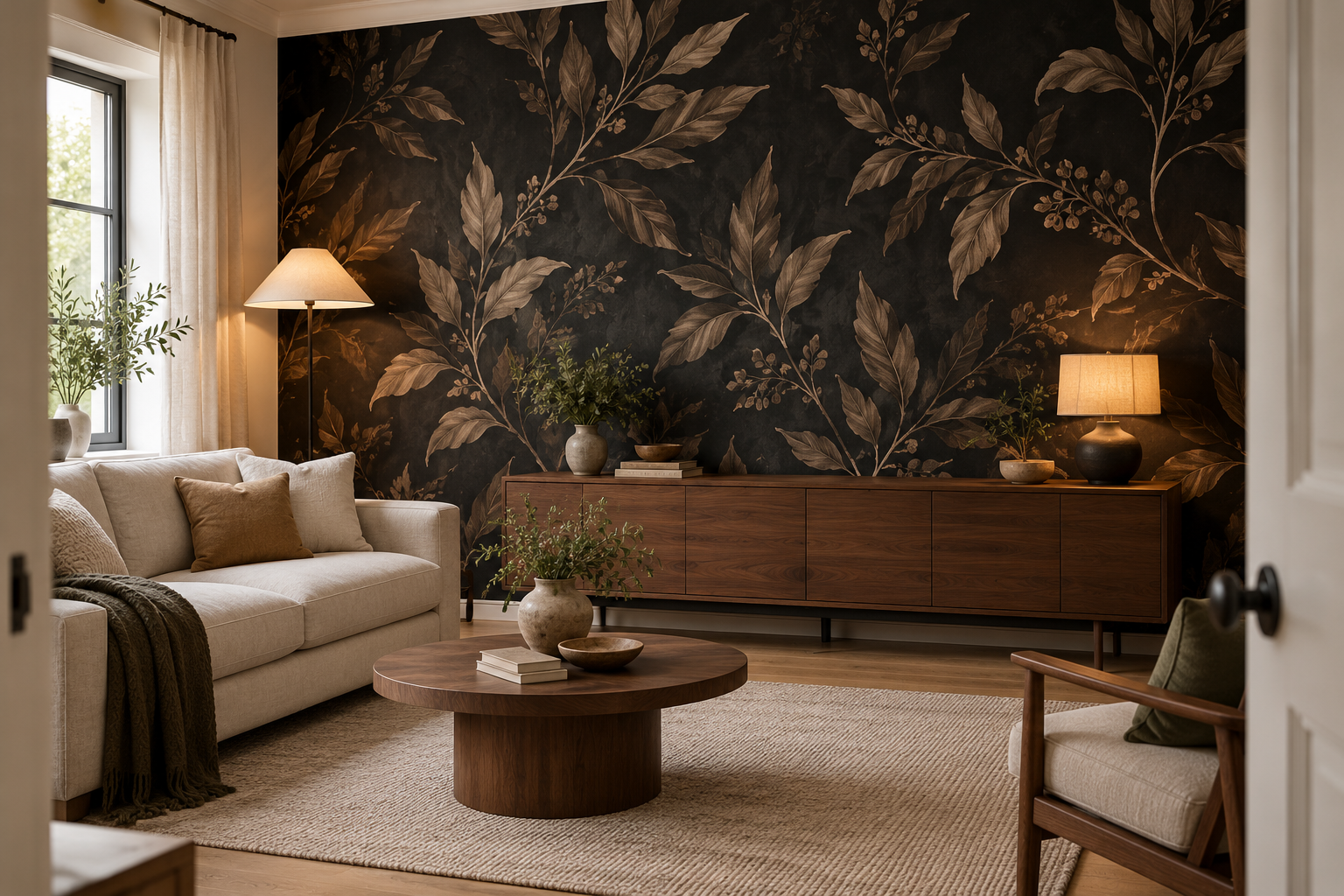
Black wallpaper can provide an elegant and subtle backdrop or a bold and dramatic focal point, depending upon the type of pattern used, the amount of contrast created and what surrounds it. Rather than making assumptions about how each black pattern will produce the same result, begin by looking at your rooms existing furnishings, lighting and the total amount of available wall space.
Decide how much black you want
Black designs generally provide a larger continuous area of color. However, when you use light elements on a black background, they can create interest and contrast, particularly if there is a lot of contrast between the element and the background.
Black Wallpaper, should be chosen based on what type of mood you want to create. For example, a black wallpaper with a simple design might give off an elegant vibe, while a black wallpaper with dramatic floral patterns or geometric designs can help establish a strong visual identity.
Beside warm wood furniture, determine if you would prefer to use a warmer black finish that appears to flow with your wood furniture or if you find the contrast of a cooler undertone to be appealing. You don’t need to choose one option based on matching the wood.
Plan the wall around your furniture
Select a wall in view of the door and common seating areas. Walls that are directly behind beds or sofas provide a frame for the furniture. Walls on the other side of a room will likely have more artwork displayed on them.
Measure the wall, then indicate the locations of all windows, doors, cabinets, headboards, etc., along with their respective dimensions (height, width) and relative placement. Evaluate the remaining portion of the wall that is still visible.
If you have off center furniture, place your artwork in the larger open area next to or above the furniture, rather than just placing everything in the center of the wall.
You might have to use the top part of the tall cabinet or headboard as a way to cover the main flower of the mural. When you are placing focal points on the wall around your furniture, place them either above or next to the furniture. Additionally, you can ask for a cropping preview that will show you what the mural would look like based upon the size of your space.
Fitted wardrobes have strips which are typically suited for repeats. Slopes will produce cropped patterns, and alcoves can produce smaller, sometimes darker areas. Each area should be considered individually prior to creating a scenic design.
Match pattern scale to clear space
Room dimensions and unbroken wall surface should be considered. Large, far apart patterns may be used in smaller spaces if there is sufficient unexposed wall space. Tiny, closely spaced patterns can appear more crowded.
In a relatively small area that has little natural light, you can compare a mainly black sample to another sample that contains more lighter areas. How they appear to you will be determined by how much contrast exists in each sample, and by the type of lighting you have available, rather than the size of the room itself.
When designing a room with repeat patterns, there will be some empty spaces that can be used for new layout designs. A large black wall mural requires a sufficient amount of space to create a visually appealing design. When using a detailed wallpaper, you should minimize the number of competing photographs and overcrowded shelves.
Test undertones, lighting and finish
Place the samples of your wallpaper next to the floor, furniture and paint in the room you are decorating. When evaluating the different types of XWALLX wallpaper range, you are considering, compare each type of wallpaper to the finish of the rooms current finishes (floor, furniture and paint) as opposed to comparing the different wallpapers based upon photos taken of them being used in rooms that have been decorated.
View physical samples vertically in daylight and with the same types of lamps typically found in the environment where they will be viewed (and in any areas that are generally darker than the rest). Using directional light may allow you to see variations on the samples surface or cause a reflection on the sample.
Matt finishes generally produce diffuse reflections while more reflective finishes may produce different types of reflection. Therefore, refer to the individual product when determining which type of finish will be used, rather than assuming both finishes exist for each item.
The way that black and accent colors will look on a screen vs. on a print is dependent upon the type of display used, as well as on the lighting conditions where the item was viewed, and finally on the texture of the material being printed. Screens produce their own light, whereas printed items reflect light. Therefore, changing these three variables (display type, lighting condition and material texture) can affect the appearance of black and accent colors.
Connect textiles, paint and coverage
When using patterned window coverings or furniture coverings, use more subdued wallpaper with a similar accent color. You can combine different patterns if they have varying sizes and color combinations.
Plain beds, simple window treatments, and/or subtle upholstered furniture are great ways to complement detailed walls. When selecting your other paint colors for the walls and trim, use tones that will blend into the background or support the overall design scheme. Be sure to check undertones of the various paints against sample chips.
A single feature wall is best suited to use as a backdrop for a large, dramatic image or a space filled with furniture. However, depending upon the type of environment you are creating (an enclosing scheme) and how you plan on using both lighting and contrasting elements, multiple or even all of your walls may be appropriate.
Leave flexibility for future changes
When selecting a wallpaper, choose one with black as the base color. This will allow you to incorporate multiple colors of textiles into your room design. You may also want to use the same wallpaper in other areas of your home or find ways to connect these rooms using similar paint colors and accent colors.
Prior to placing your order, look at physical samples, cropping and furniture placement prior to making decisions. Review the manufacturers documentation to determine what types of materials are used in the product, if the product is suitable for the area where it will be installed, how the product should be installed, and how the product should be cared for instead of assuming that the quality of the product is known.
