
A porch can be one of the most inviting spaces in a home. It is a place for quiet morning coffee, casual dinners, and evenings spent outdoors with family and friends. But even a beautifully furnished porch can sit unused when the afternoon sun becomes intense, mosquitoes arrive, or a cool breeze makes sitting outside uncomfortable.
Creating a more usable porch starts with understanding what keeps you from enjoying it. With the right combination of weather protection, shade, furniture, and lighting, you can make the space more comfortable while keeping the open feeling that makes a porch appealing.
Start With How You Want to Use the Space
Before choosing furniture or making improvements, think about when and how you use your porch.
A porch used mainly for summer dinners may need insect protection and gentle lighting. A west-facing porch might benefit most from shade during the afternoon. If you enjoy sitting outside in spring and fall, reducing exposure to wind and rain may be the priority.
Make a short list of the problems you notice most often. Does rain blow onto the seating area? Does glare make it difficult to read? Do bugs send everyone indoors at sunset?
These observations will help you choose improvements that solve everyday problems instead of simply changing the appearance of the space.
Add Flexible Protection From the Elements
An overhead roof provides shelter, but it does not stop everything from entering through the sides. Wind-driven rain, low-angle sunlight, and insects can still make a covered porch uncomfortable.
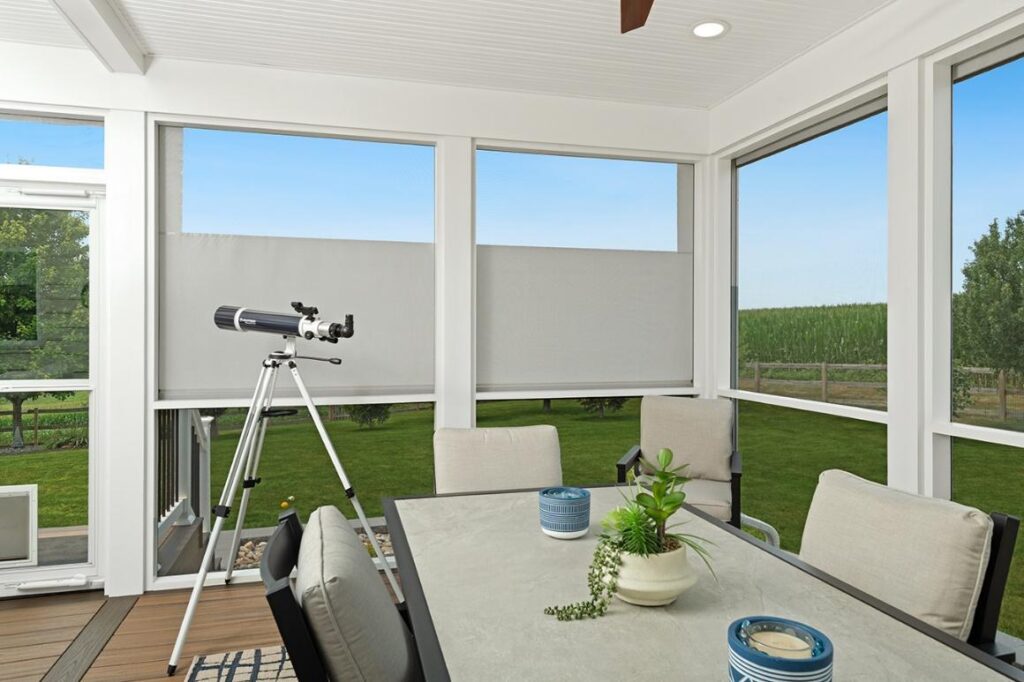
For homeowners who want adjustable protection, custom porch enclosures offer several material and operating options. Clear vinyl can help shield the space from wind and rain while preserving the view. Shade mesh helps reduce sunlight and glare, while insect screening allows ventilation with protection from bugs.
Retractable systems are particularly useful when you want to change the space throughout the day. You can lower the enclosure when protection is needed and raise it when conditions are pleasant.
The best material depends on your main concern. A screen designed for airflow will perform differently from a clear panel intended to reduce exposure to wind and rain.
Choose Clear Vinyl When the View Matters
If your porch overlooks a garden, waterfront, or wooded backyard, maintaining that view may be an important part of the design.
Clear vinyl panels allow natural light into the space while helping protect against breezes and blowing rain. They can be a practical choice for homeowners who want to enjoy their porch during cooler or unsettled weather.
It is important to have realistic expectations. Clear vinyl porch curtains do not provide the insulation of permanent windows, and an enclosed porch does not automatically become a climate-controlled room.
Clear vinyl also requires appropriate care. Follow the manufacturer’s cleaning and storage instructions, and avoid leaving it tightly rolled for extended periods in hot weather. Discuss material choices and seasonal use with the supplier before ordering.
Control Afternoon Sun With Shade Mesh
A covered porch can still receive strong sunlight when the sun drops below the roofline. This is especially noticeable on west-facing sides, where afternoon glare can make the space uncomfortable just when you want to use it.
Shade mesh helps filter sunlight while allowing some outward visibility and airflow. The amount of shade, visibility, and privacy depends on the fabric, its openness, and the lighting conditions.
Choose a material sample before making a final decision. Hold it up on the porch at the time of day when sunlight is most troublesome. This gives you a better sense of how it affects both the view and the light entering the space.
Do not assume that shade mesh provides complete privacy at night. When the porch is brightly lit and the yard is dark, visibility through the material may change.
Keep Insects From Cutting Evenings Short
For many households, insects are the biggest obstacle to enjoying a porch.
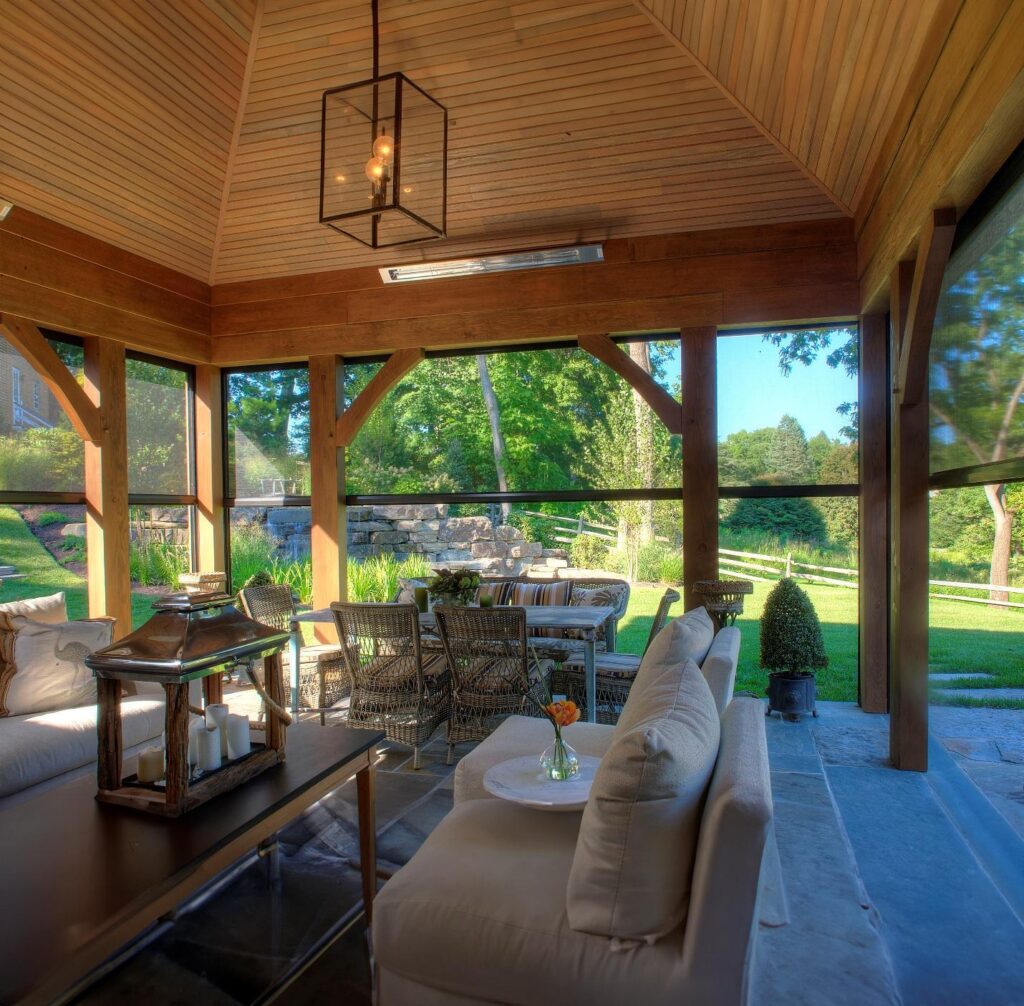
Insect screening helps keep mosquitoes and flies out while allowing fresh air to circulate. Retractable screens are useful for homeowners who want protection in the evening and an open porch at other times.
The fit matters as much as the screening material. Gaps around the edges, floor, or entry points can allow insects inside. Consider how people will enter and exit the space, especially if the porch connects directly to the backyard.
If you need both insect protection and weather protection, ask about pairing two separate retractable systems in the same opening. Each system operates independently, allowing you to choose the protection that suits the conditions.
Decide Between Manual and Motorized Operation
How often you expect to adjust an enclosure can help determine which operating style makes sense.
Manual roll-up systems can be a practical choice for seasonal use or homeowners who prefer a straightforward mechanism. Rope-and-pulley operation allows the curtains to be raised when they are not needed.
Motorized systems offer convenient adjustment at the push of a button. This can be especially helpful when several openings need to be raised or lowered regularly.
Material availability varies by system. Clear vinyl and shade mesh may be available in manual and motorized configurations, while some fabric curtains are offered only with manual operation. Confirm the available combinations before planning the project.
Finish the Space With Comfortable, Practical Details
Once you have addressed sun, weather, and insects, focus on the details that make the porch pleasant to use.
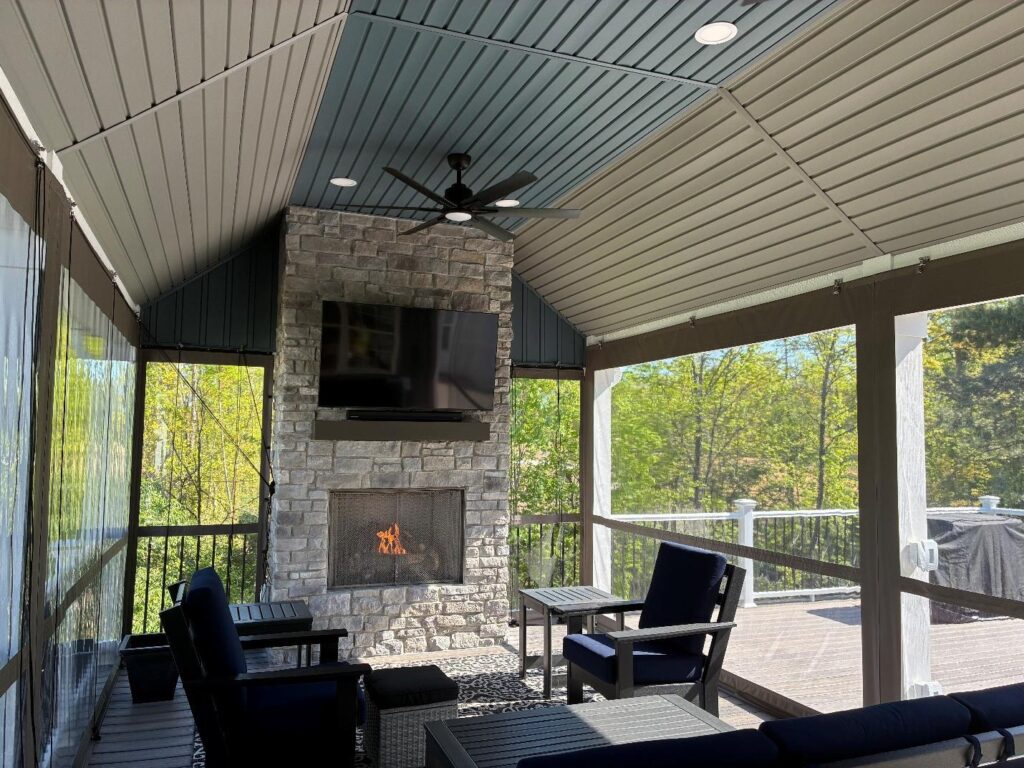
Choose furniture sized for the space, leaving comfortable paths around seating and doors. Outdoor cushions with removable covers are easier to maintain, and a suitable outdoor rug can help define a seating area.
Use several modest light sources instead of relying on one bright overhead fixture. Wall lights, table lamps rated for the location, or softly glowing string lights can make evening gatherings more comfortable.
Keep ventilation in mind, too. On warm days, opening the enclosure and using an appropriately rated ceiling fan can help air circulate.
Plan for Fit and Installation
Before ordering an enclosure, check the dimensions of each opening and the surfaces where the system will attach. Openings that look identical may have different measurements, and sloping floors or uneven framing can affect the fit.
Follow the supplier’s measuring instructions and confirm mounting requirements before fabrication. A qualified contractor can help assess the supporting structure and select suitable anchors.
Ask about everyday care, operating limits, and what to do when severe weather is forecast. Understanding these details early helps you choose a system that fits both your porch and your routine.
A comfortable porch begins with solving the things that keep you indoors. Whether that means adding shade, screening out insects, or reducing exposure to wind and rain, thoughtful improvements can give you more opportunities to enjoy the outdoor space you already have.
