
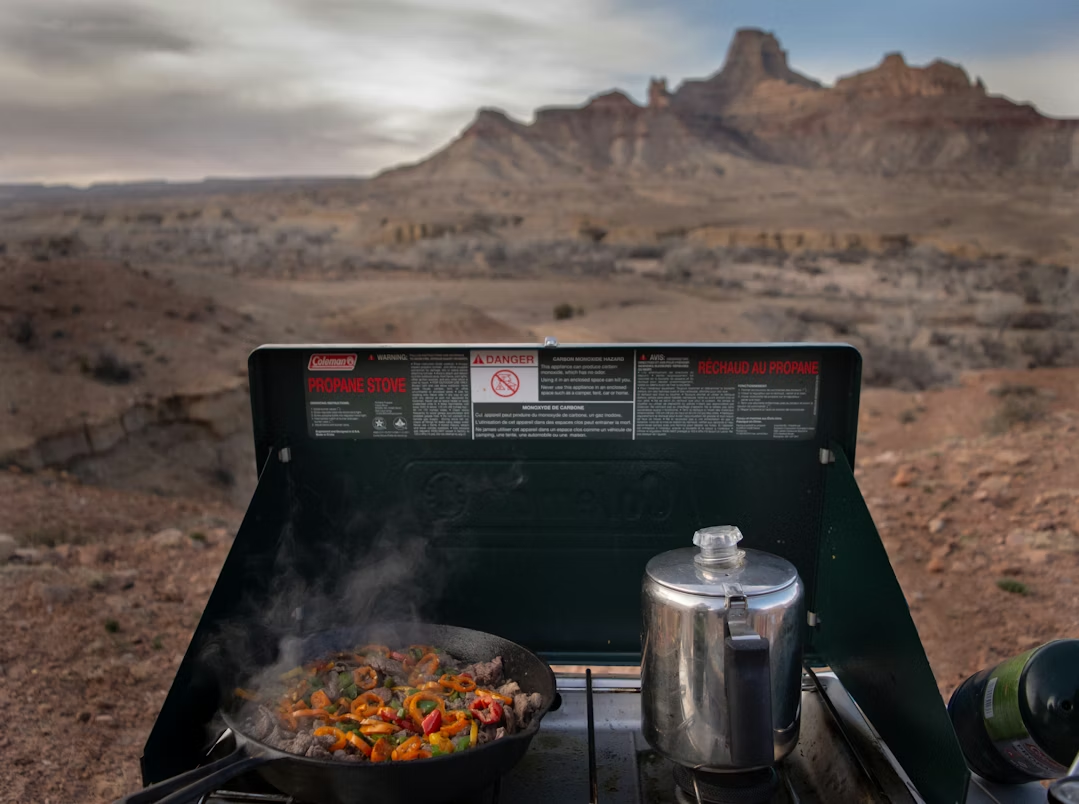
Want your outdoor cooking efforts to go farther?
Pick up any pot and throw it in the back of the truck. Head into the woods and wonder why everything burns or takes hours. Most folks tackle camping cookware for outdoor cooking like that – throwing together whatever cookware they think will work.
Here’s the reality…
There are three factors that separate mediocre camp cooking from one-of-the-best-trips-ever meals:
- Lids
- Handles
- Heat transfer
Pick the right tools here and everything else is simple.
What’s Inside:
- Why Are Lids So Important?
- Handles: What Every Camper Seems To Forget
- Heat Transfer: How to Actually Cook Over a Fire
- Building Your Ideal Outdoor Cookware Setup
Why Are Lids So Important?
Believe it or not, a lid is not just a lid. Once camping, a lid is one of the best assets in the kit.
Heat escapes quickly when cooking over an open flame or portable camping stove. A good lid seals in steam and heat that would otherwise be lost off the edges of the pot. Shorter cook times and less fuel used matter out in the wild where resupply isn’t possible.
Bonus points if that lid doubles as a frying pan or plate. Many camping cookware for outdoor cooking sets come with lids that serve double duty — especially any well-equipped campfire cooking kit. That means one item of cookware works twice as hard on every trip.
Lid material also matters if you plan on lifting it off. Glass lids allow cooks to see inside without losing heat by opening the lid. But no one wants to carry around a fragile, heavy lid. Aluminium and stainless steel lids are lighter weight and durable — ideal for backpacking.
Lastly, consider how well the lid fits on the pot. Does it rattle around when moved, or sit tight? Movement equals lost heat and efficiency.
Handles: What Every Camper Seems To Forget
Here’s something people realise after it’s too late…
Poor handles are a trip-ending nightmare. Burns, dropping meals, boiling water on skin — these are handled issues.
Look for these features in handles when picking camping cookware for outdoor cooking:
- Can fold away or be removed entirely— less bulk to pack and makes storage easy.
- Have a heat-resistant grip(silicone or rubber type). This protects fingers from burns even when over high heat.
- Lock securely into place.Shifting handles aren’t just annoying — they’re dangerous.
- Are lightweight.Heavy handles take up precious grams on backpacking trips.
Riveted handles will almost always outlast welded handles. Stainless steel pots with riveted handles are ideal if the goal is cookware that lasts years.
Another option some brands use: universal handles. These clip onto several pots and pans as needed. It’s genius for minimising weight without losing peace of mind around the fire.
Heat Transfer: How to Actually Cook Over a Fire
This is where it starts to get fun…
Heat transfer is how efficiently heat moves from flame to food. And the pot’s material drastically changes this process.
Aluminium is by far the most popular choice for camping cookware for outdoor cooking. Check any best seller’s list and aluminium cookware makes up 45% of sales. That’s because it heats up quickly, transfers heat evenly across the surface, and doesn’t weigh much. Hard-anodized aluminium takes this a step further with even harder metal that doesn’t scratch as easily and won’t leach into foods with high acid content.
Stainless steel on the other hand takes longer to heat. But it holds that heat longer too. For this reason, stainless is better for slow cooking over low heat.
Titanium is the high-end option of the bunch. It heats rapidly and weighs next to nothing. But food can burn easily if not careful, as it creates hot spots.
Lastly, pay attention to the thickness of the pot base. Thin bases create hot spots right above the flame. Thick bases spread that heat out evenly. For cooking over a fire, thicker is best.
It’s not just stove efficiency that matters. Over 45% of campers say bulky or poorly designed cookware stops them from cooking what they want on trips. Choose the right cookware and that won’t be a problem.
Building Your Ideal Outdoor Cookware Setup
Ok, now it’s time to pull it all together.
Buying camping cookware for outdoor cooking doesn’t have to be difficult. Follow these easy guidelines and a perfect cookware set comes together in no time.
How many people are being cooked for? Solo campers have drastically different needs than families of four. One person? Maybe a single pot, a lid that doubles as a pan, and some folding handles are all that’s needed.
Next, consider where cooking will happen most often. Cooking over an open fire requires thicker cookware bases and more durable materials. But for a small backpacking gas stove, thinner aluminium works great. Pair the cookware with the heat source to eliminate wasted fuel and uneven heating.
Packability is another consideration. The global camp cookware market stood at USD 3.2 billion in 2024 and is predicted to grow, which means more compact, nestable options than ever before. Look for nestable cookware sets — those that allow each piece to fit inside another — as a best practice for minimising space.
Last but not least, look for compatible lid and handle sizes across the set. Are all the lids and handles the same diameter? Ideally, yes. Having one lid and one handle means they can be used across all pots and pans without carrying extras.
Wrapping Up Outdoor Cooking Efficiency
Picking the right camping cookware for outdoor cooking is simple: lids that seal in heat, folding handles that won’t burn or take up half a backpack, and cookware materials suited to how cooking will be done.
To recap:
- Pick lids that seal tight and double as something else
- Invest in foldable heat-resistant handles with good locks
- Pair cookware material to planned heat source
- Look for nestable sets to maximise packing efficiency
- Match the diameter of pots and pans in a set so one lid and one handle works for everything
Simple decisions. But choosing the right pieces means meals will go smoother and are far more enjoyable on trips to come. Choose wisely. Every adventure afterwards will be easier because of it.
