
Granite countertops are a popular pick because they blend natural charm with solid durability. Whether it’s in a kitchen, a bathroom, or even some outdoor nook, granite can stick around for decades, as long as it gets the proper upkeep. A big part of that upkeep is sealing. Even though granite is famous for being tough, it’s still a natural stone with pores, and those pores can soak up liquids if the surface isn’t protected. Sealing helps lower the chance of stains and regular wear ,so the top keeps looking good instead of slowly dulling. If you know how frequently granite should be sealed, and how to spot early signs that it’s slipping, you can safeguard your investment and skip annoying repairs. With the right routine care, granite countertops usually keep a clean, polished, and attractive look for many years.
Why Granite Countertops Need Sealing
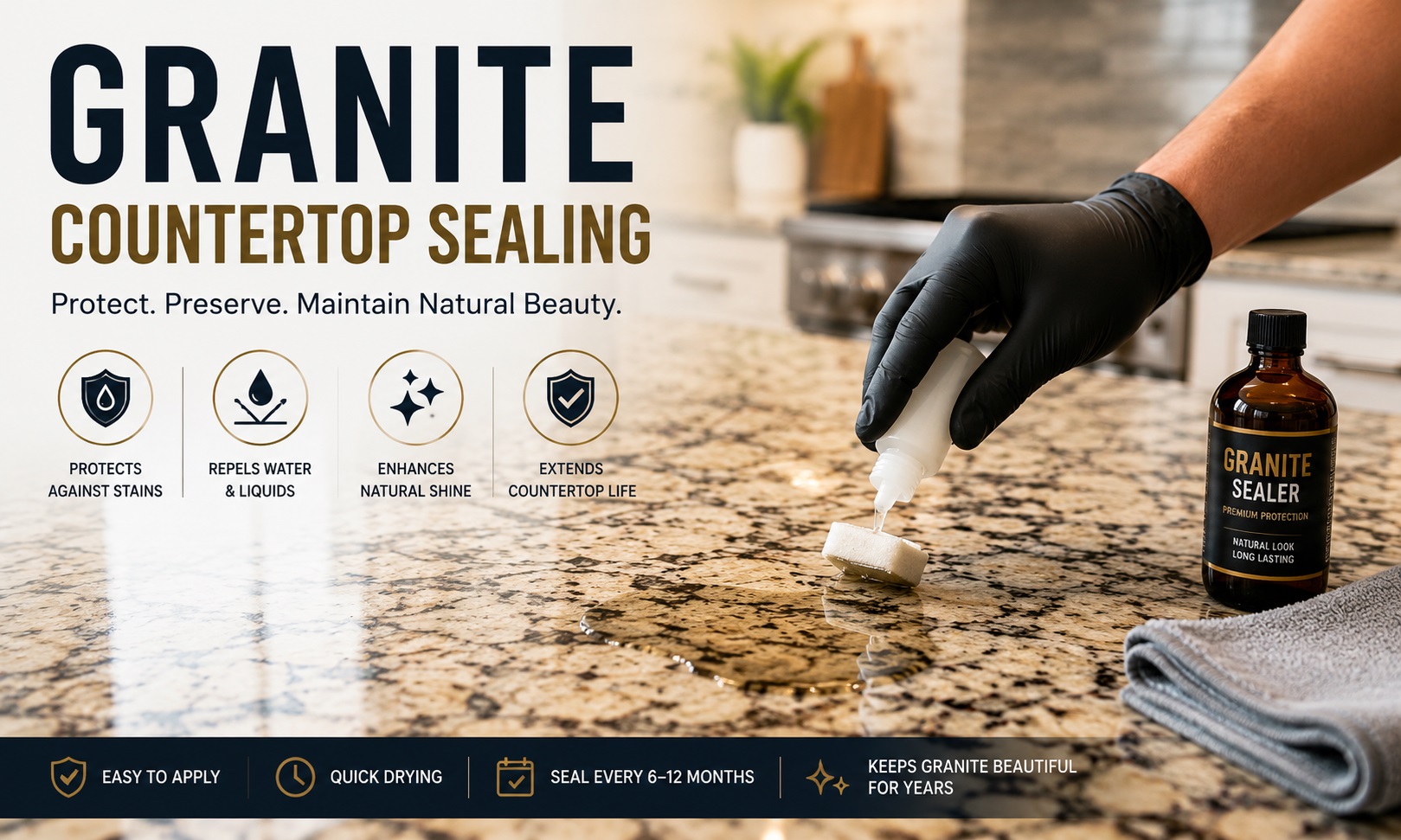
Granite is a natural stone and it has tiny pores all over its surface. The level of porosity changes from one slab to the next ,but none of it is truly non-porous. So everyday liquids such as water, cooking oil, coffee, tea, and other kitchen or household items can gradually work their way into the stone when it’s not sealed.
A decent sealant forms a protective shield, which reduces how much moisture and stains can get absorbed. Instead of covering up the granite or making it look “different,” a quality penetrating sealant helps keep the stone’s natural pattern and color while adding an extra layer of defense for daily use. Sealing is one of the simplest methods to extend the countertop’s lifespan and keep long-term worry levels down.
Damage from missing sealant, or sealant that’s worn out, doesn’t always show up immediately. It often develops slowly.
Popular Granite Countertop Finishes
How Often Should Granite Countertops Be Sealed?
The sealing frequency depends, largely on how often the countertop is used, in a real life sort of way. High-traffic kitchen countertops get hit with frequent spills , food preparation, and pretty constant daily cleaning, so that protective seal tends to wear down faster than you’d expect. In most cases, these surfaces should be resealed every one to two years.
Granite countertops in lower-use zones, like bathroom vanities, usually see less wear and also fewer staining concerns. Because of that, resealing every two to three years is often enough to keep them protected and not feel “almost fine” but actually exposed.
Rather than just trusting the calendar, homeowners should also keep an eye on how the surface looks over time. Every slab of granite is different, and things like mineral makeup, any prior treatments, and how much moisture it sees can all change how long a sealant stays effective.
The Water Drop Test: A Simple Way to Tell
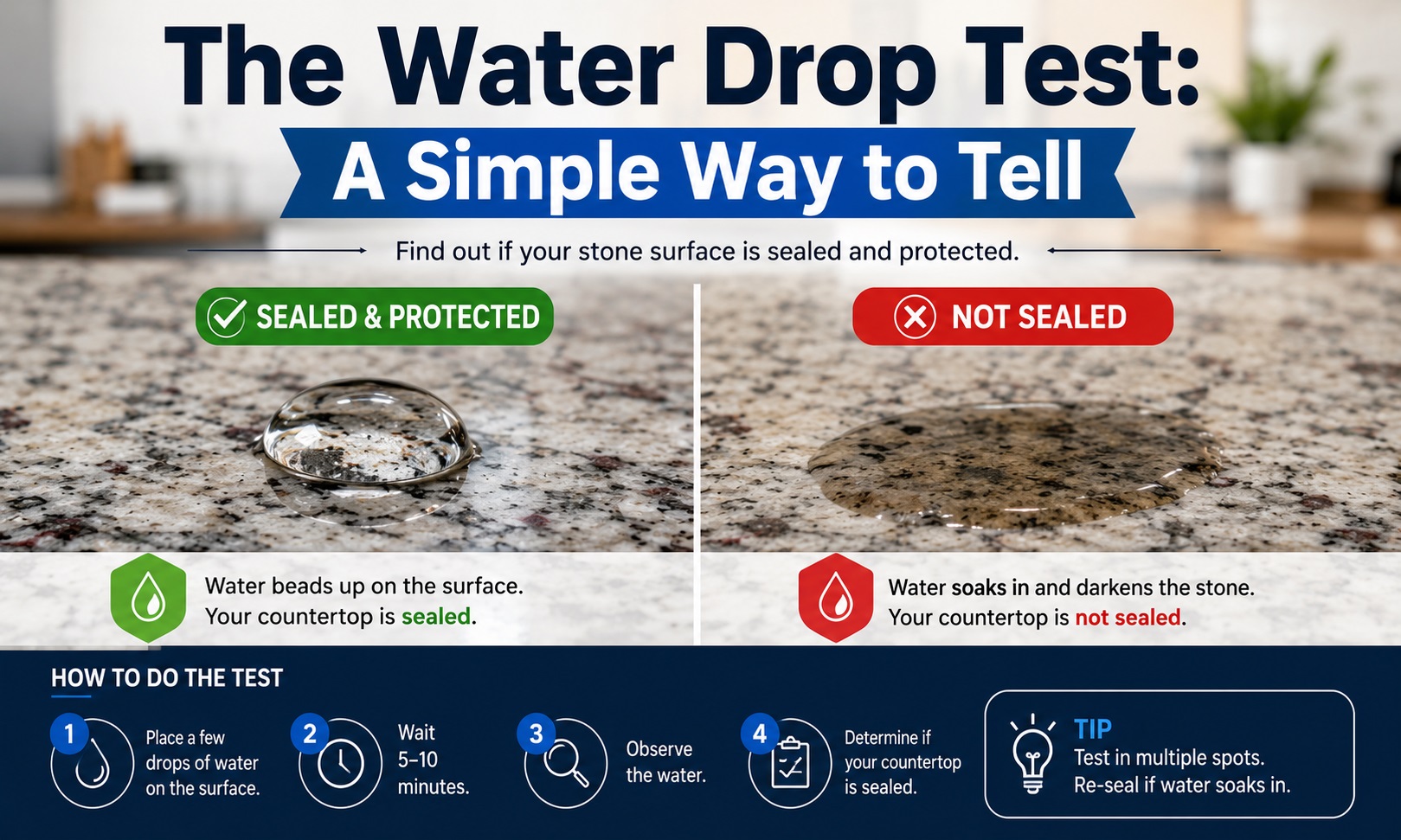
One of the easiest methods to figure out if granite needs resealing is the water drop test.
Set a few drops of clean water on the countertop and watch closely what happens. If the water gathers into beads on the surface, the existing seal is still doing its job. If the stone starts to darken as the water absorbs, then the granite probably needs sealing, sooner rather than later.
A second helpful hint is the soaking timeline. When the water soaks in within about ten minutes , that’s generally a sign the countertop should be resealed. This straightforward check lets you assess the protective layer’s condition without any special tools or anything fancy.
How to Keep Your Granite Looking New with Professional Cleaning and Sealing in Arizona
Choosing the Right Granite Sealer
There’s really no universal granite sealer that works perfectly on every single countertop. Like, different granite varieties have different mineral compositions, and a lot of slabs get resin treatments during manufacturing to fill natural fissures and kind of strengthen the stone at the same time.
Also , because manufacturers might use different types of resin , some sealants work better than others depending on the exact slab you have. If you pick the wrong product it can end up with that cloudy look, or it can even change the final appearance of the surface finish.
So the safest plan is to test a few sealants on a small sample taken from the same granite batch. That way, homeowners can compare the stain resistance, watch for any shift in color, and check the overall look before committing to treating the full counter.
For kitchen countertops, a water-based food safe penetrating sealer is usually the best recommendation. It helps protect the stone without strongly altering its natural finish.
How to Seal Granite Countertops
Sealing granite can be pretty simple maintenance, as long as it’s done correctly
First, thoroughly clean the countertop using a pH-neutral granite cleaner. Get rid of grease, dirt, and any residue , then let the surface dry completely before you apply any sealer.
Next , put on gloves. Apply the sealer evenly across the countertop with a soft sponge or applicator. Work section by section so coverage stays consistent. Let the product soak into the stone for about 15 to 20 minutes, and follow whatever timing the manufacturer lists. If it starts drying fast , add a little more sealer so the stone stays damp through that soaking period.
After absorption, wipe off extra material with a clean microfiber cloth. Then buff the surface until it looks smooth, streak-free. Finally, let the countertop cure for a while, exactly how long the label says.
Marble Stone Secrets: How to Choose the Perfect Style for Your Home
Daily Care Between Sealings
Daily, proper maintenance really does seem to help the sealant hang in there longer, and it also keeps the granite looking its best kind of throughout the years. Just try to clean the countertop on a regular basis, using a mild, pH-neutral cleaner made for natural stone. And don’t go for harsh household stuff like vinegar or bleach , because those can mess with the protective seal after a while.
If something spills, try to blot it right away, instead of rubbing it around on the surface. That fast cleanup, seems to reduce the odds that liquids soak in and turn into stains. For stains that are more stubborn , a granite poultice can be used when it becomes necessary.
Even though granite is naturally heat resistant , it’s still a smart habit to use trivets or hot pads under super hot cookware. Also, try not to let heavy impacts happen , since that helps protect the surface and limits extra wear.
First-Time Sealing vs. Resealing
Sealing a newly installed granite countertop is a little different compared to normal resealing.
For first-time sealing, the countertop has to be completely clean, and there should be zero leftover installation residue before you put on the sealant. That way, the protective layer bonds well to the stone, not just on top of it.
When you are resealing, the main goal becomes refreshing the existing protection rather than stripping away what’s already there. Usually a deep cleaning is enough before you apply a new coat of sealant.
Conclusion
Granite countertop sealing is, like one of the easiest ways to protect natural stone from stains, moisture and those everyday little bumps. Even though granite is very durable it still has this porous structure, so regular sealing turns into a big deal for long-term care. Most kitchen countertop areas usually do well with resealing every 1 to 2 years , while the lower use bathroom surfaces often need a check every 2 to 3 years. If you do a quick water drop test it can show when that protective layer is starting to thin out. Picking the right penetrating sealer, then doing the application steps correctly and sticking to gentle cleaning products in between sealings, all of that really helps keep the granite looking great. When you stay consistent with maintenance and reseal on time, your granite countertop should keep its natural beauty and dependable performance for many years.
