
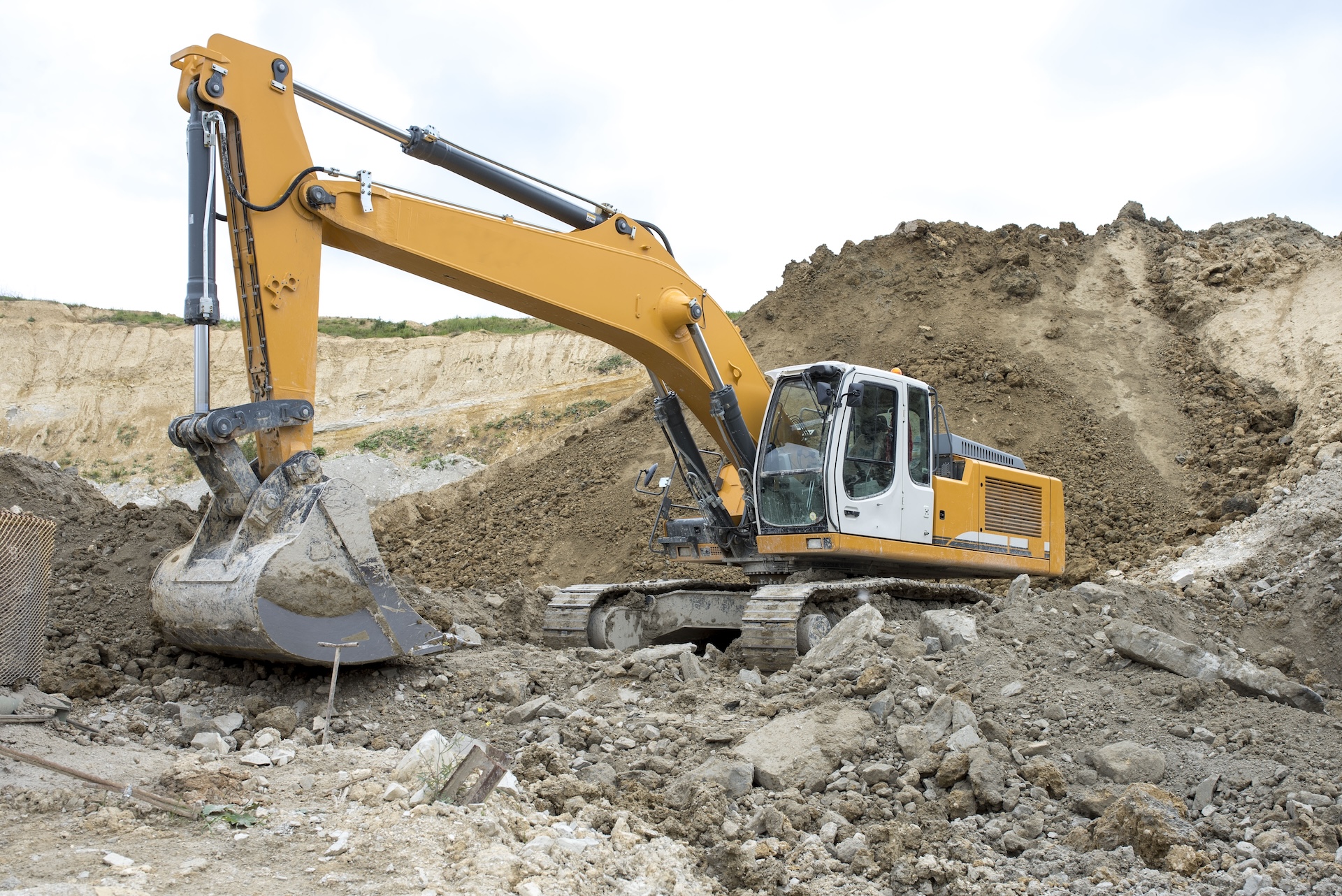
Earthmoving has always relied on skill, experience, and a fair amount of getting out of the cab to check the grade. That’s changing fast. GPS guidance, often called machine control, is transforming how excavators work, taking much of the guesswork out of digging and letting operators work to precise designs straight from the seat.
It’s one of the most significant shifts in the industry in years. Here’s how excavator GPS works and why it’s reshaping the way we dig.
What excavator GPS actually is
At its core, excavator GPS is a system that tells the operator exactly where the bucket is in relation to the design, in real time. Using satellite positioning combined with sensors on the machine, it knows the precise position of the digging edge and compares it against the plan for the site.
Instead of relying on pegs, string lines, and repeated manual checks, the operator sees the target depth and grade on an in-cab screen and digs straight to it. The design lives in the machine.
How it works from the cab
Sensors mounted on the boom, arm, and bucket track the exact geometry of the excavator, while positioning technology locates the machine on the site. The system combines this information to show the operator, on a display in the cab, how close the bucket is to the required level and where it needs to go next.
The end of constant grade checking
Traditionally, achieving an accurate grade meant stopping frequently, climbing out, and checking levels by hand, often with a second person on the ground. GPS guidance largely removes that cycle. The operator works continuously to the design without the constant stop-start of manual verification.
This changes the rhythm of the work entirely, keeping the machine productive instead of pausing repeatedly to confirm it’s on target.
Accuracy and consistency
Because the machine is working directly to a digital design, the accuracy achievable is high and, importantly, consistent. The system doesn’t tire or lose concentration late in the day, so the last trench of the afternoon is dug to the same standard as the first of the morning.
That consistency is a big part of the appeal, producing results that match the plan closely across the whole job.
This repeatability is especially valuable on complex sites with varying levels and slopes, where holding an accurate grade by eye across a large area is genuinely difficult. The system carries the design faithfully from one part of the job to the next, so the finished surface ties together as intended.
Safer sites with fewer people in harm’s way
There’s a safety dimension too. Reducing the need for workers on the ground checking grade near an operating excavator means fewer people in a hazardous zone. Keeping people out from around a working machine is a meaningful safety improvement on any site.
Combined with clearer information for the operator, machine control contributes to a safer as well as a more efficient dig.
A genuine shift in earthmoving
GPS guidance isn’t a gimmick; it’s a real change in how earthmoving is done. By putting the design in the cab and guiding the operator to it precisely, it makes digging faster, more accurate, more consistent, and safer, and it’s increasingly becoming the expected standard on larger jobs.
For operators and contractors alike, understanding and adopting the technology is fast becoming part of staying competitive in modern earthmoving.
