
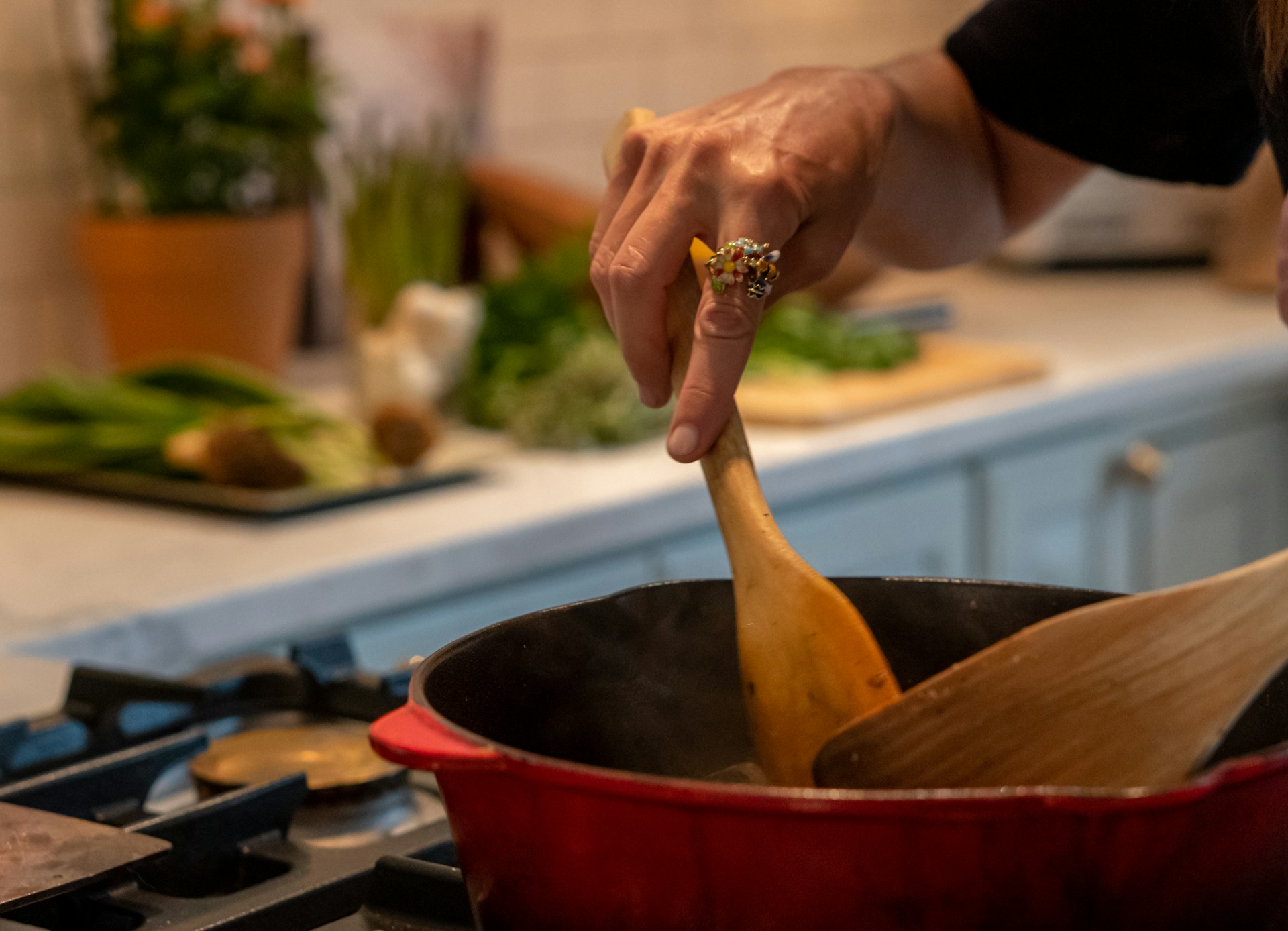
Frying at home gets you crisp, restaurant-quality food and, usually, a fine mist of grease across the cooktop, the backsplash, and your forearms. The splatter feels random. It is not.
Most of it comes from one thing: water hitting hot oil. Control the moisture, the temperature, and the barrier between pan and room, and you can fry often without repainting the kitchen afterward.
This guide covers why oil splatters, how to stop most of it before it starts, how to deep-fry safely, and how to protect and clean the stove itself. It is written for home cooks who fry regularly and are tired of the mess.
Why Does Frying Splatter So Much?
Splatter is steam escaping. When wet food meets oil at around 350°F, the water on its surface flashes to steam instantly and blows tiny droplets of oil outward.
Two other factors make it worse. Oil that is too cold lets moisture build up before it cooks off, and a crowded pan drops the temperature and traps steam, so both produce more spitting, not less.
How Do You Stop Grease From Splattering When You Fry?
Most splatter is preventable with habits, not gear. Work through these in order before you reach for a tool.
- Dry the food. Pat proteins and vegetables with paper towels before they touch the oil. A quick dredge of flour or a pinch of salt on wet items absorbs surface moisture, a trick long used in professional kitchens.
- Hold the right temperature. Keep frying oil in the 350°F to 375°F range and use a thermometer. Oil that shimmers but does not smoke means fewer micro-explosions.
- Do not crowd the pan. Fry in batches so the oil temperature stays steady and steam can escape instead of building up under a pile of food.
- Lower food gently. Use tongs or a slotted spoon and lay items in away from you. Dropping food in from height is what launches the worst splashes.
When you do want a barrier, a mesh splatter screen is the classic fix. According to testing by Serious Eats and by Consumer Reports, fine-mesh screens from makers like All-Clad, Le Creuset, Frywall, and OXO contained grease well while still letting steam escape. A screen catches most spatter; it will not keep your stove spotless, and very fine oil mist still settles around the edges.
What’s the Safest Way to Deep-Fry at Home?
Deep-frying is the highest-reward and highest-risk method, because hot oil is flammable. A few rules keep it controlled.
- Fill the pot no more than two-thirds. Leave at least four inches between the oil surface and the rim so adding food does not cause an overflow.
- Use a heavy, deep pot. A Dutch oven or thick-based stainless pot holds temperature steady and keeps oil where it belongs.
- Never leave frying oil unattended. Cooking is the leading cause of home fires in the United States, and unattended cooking is the leading factor, according to the National Fire Protection Association. – NFPA cooking safety
- If oil catches fire, never use water. Water turns to steam instantly and throws burning oil across the room. Smother the flames with a metal lid or use a Class K or ABC extinguisher, and turn off the heat. – USFA cooking fire safety
That last point is the one home cooks most often get wrong. The instinct to grab water is exactly the move that turns a contained pan fire into a kitchen fire.
How Do You Protect the Stovetop Itself?
Even careful frying throws some grease. The goal is to make whatever escapes land on something you can lift and wash, not bake onto the cooktop.
A splatter screen handles the airborne mist. For the surface and the gaps around the burners, a stovetop protector or a set of stove top covers adds a removable layer you can pull off and clean. Gas ranges complicate this, because the grates run hot and the open flame demands clearance, so any cover has to be rated and positioned for that.
If you fry on gas and want a fitted option, Stove Shield gas stovetop protectors are cut for common gas-range layouts; confirm the heat rating and grate clearance for your specific model before use. A protector reduces cleanup. It does not replace wiping the cooktop or keeping the burner area clear, and no liner should ever sit where it contacts the flame.
How Do You Clean Up Grease After Frying?
Timing matters more than product. Warm grease wipes off in seconds; the same grease, cooled, bakes into a film that takes real scrubbing.
Wipe the cooktop while it is still warm, not hot, with a degreaser you have already used safely on your surface. Pay attention to the gap between the stove and counter, where aerosolized oil collects out of sight. Cooled oil left there turns into a sticky sink that attracts crumbs and pests.
For used frying oil, let it cool fully, then strain and store it for reuse or dispose of it in a sealed container. Never pour it down the drain, where it congeals and clogs pipes.
Frequently Asked Questions
How do I stop oil from splattering when frying?
Dry your food thoroughly, keep oil between 350°F and 375°F, do not overcrowd the pan, and lower food in gently with tongs. Add a mesh splatter screen for the spatter that still escapes.
Is a splatter screen or a lid better for frying?
A mesh splatter screen is better while frying because it blocks oil droplets but lets steam escape, so food stays crisp. A solid lid traps steam and makes food soggy, though a lid is the right tool to smother an oil fire.
What temperature should oil be for frying?
Most frying works best between 350°F and 375°F. Below that, food absorbs oil and moisture builds up; above it, the oil smokes and splatters more. A clip-on or instant-read thermometer is the reliable way to check.
Do stovetop protectors help with frying grease?
Yes, they catch spatter and spills around the burners so cleanup is washing a liner instead of scrubbing the cooktop. On gas ranges, the cover must be heat-rated and kept clear of the flame and grates, and it supplements rather than replaces routine wiping.
How do I put out a grease fire safely?
Turn off the heat and smother the flames with a metal lid or a Class K or ABC fire extinguisher. Never use water, and never carry a flaming pan to the sink. If the fire grows, leave and call 911.
Key Takeaways
- Splatter is mostly water flashing to steam in hot oil, so the fix starts before the pan: dry the food and do not crowd it.
- Hold oil at 350°F to 375°F with a thermometer; too cold and too hot both splatter more.
- Deep-fry with the pot two-thirds full, four inches of headroom, and never leave it unattended (NFPA: unattended cooking is the leading fire factor).
- In an oil fire, smother with a lid or extinguisher. Never use water (USFA).
- A mesh splatter screen plus a heat-rated stovetop protector contains most grease; wipe the cooktop warm to keep cleanup easy.
