
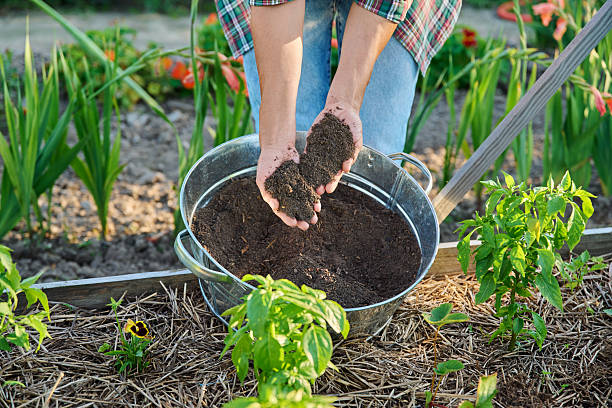
Beyond looking for rentals that feature the top home trends, many renters are now looking for spaces that promote sustainability. As a result, it’s no surprise that people with yards are more likely to save our environment by composting. After all, you have a backyard and can easily go about your business.
For tenants who live in an apartment, it can be a bit trickier. Sharing walls with your neighbors means you have to worry about the smell and possible flies disturbing them. But with the right hacks, it’s doable. Welcome to this realistic guide to composting in an apartment.
The Golden Rules of Apartment Composting
Green vs Brown Balance
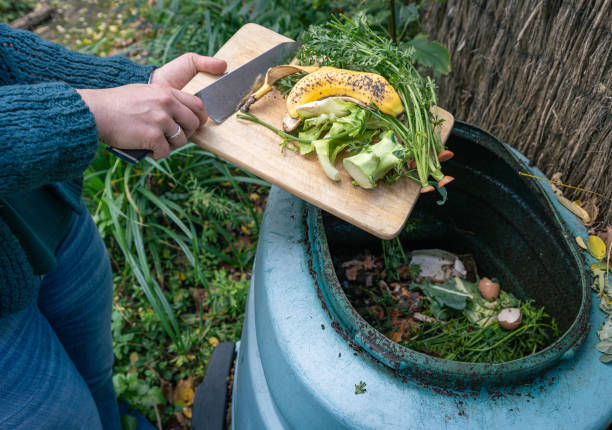
Before diving in, we need a bit of background on composting. When people throw food in the trash, it typically ends up in landfills, where it rots and, in the absence of oxygen, turns to methane, which can be harmful to the environment. Thus, composting is a DIY solution to that problem. For context, composting is essentially controlled decay of organic materials, such as coffee grounds, eggshells, and vegetable peels, to form nutrient-rich soil.
Unfortunately, when these food scraps start to break down, their nitrogen-rich components can attract rodents and insects that make your home a sanitation hazard. That’s why some landlords ban the practice. It’s essential to check your lease or reach out to your property management company in Baltimore to ensure composting won’t interfere with our lease.
So how do you keep your apartment from smelling like a swamp? It’s simple. You need to balance those “greens” with “browns.” Browns are essentially carbon-rich materials like cardboard scraps, egg cartons, and dry leaves. Adding these items to your compost help traps excess moisture and block out odors. Using a balance of 2:1 for browns to greens will keep your compost project from becoming a hot mess and stinking up your apartment.
What Stays Out to Avoid Pests
Another way to do composting right in an apartment is to know what to keep out to avoid pests. As highlighted earlier, the wrong ratio can attract rodents that wreak havoc in your home by spreading diseases and damaging your furniture. That’s why it’s essential to deter them by staying away from composting oxygen-rich disposables.
For example, dairy and meat often release a putrid smell that attracts rodents when they start to decay. The same also applies to food peels that are extremely acidic, such as oranges and onions. Thus, it would be best to avoid adding these items to your compost. Remember to also avoid oils and fats as well, as their greasy nature essentially makes them waterproof and terrible compost materials.
3 Apartment-Friendly Composting Methods
Bokashi
There are now more ways to master composting in an apartment without bothering roommates. One of the most common methods is Bokashi, which is a Japanese fermentation method that involves locking the compost in an airtight bucket with specialized bran inoculated. This method differs from the regular aerobic process of composting because it requires no oxygen. As a result, it’s incredibly fast-acting and takes up much less space. On the other hand, a major drawback is that it doesn’t turn to soil immediately. It produces a liquid byproduct you have to drain regularly, and even then, the compost is only half-done, and you have to bury it.
Vermicomposting
Another popular option for composting involves using Red Wiggler worms to break down your trash. They’re thought of as the gold standard for apartment dwellers because if the balance is correct, you essentially create a self-contained ecosystem. It also has a leg up on Bokashi because it produces ready-to-use soil that’s perfect manure for your houseplants and other gardening needs. Unfortunately, vermicomposting requires more routine hands-on work to keep the ecosystem balanced. After all, worms are living creatures that are sensitive to temperature.
Electric Composter
An electric composter is a small appliance that speeds up the breakdown of your kitchen scraps using heat and air circulation. It is designed for indoor use in apartments and works much like a high-speed, controlled composting system.
Instead of waiting months for organic waste to decompose, an electric composter can process food scraps into a soil-like material in 12–24 hours. You put in things such as fruit and vegetable peels, coffee grounds, tea bags, and small amounts of other organic waste. The machine uses heat, airflow, and sometimes a mixing blade to dry and break down the material quickly. However, they’re expensive and can set you back by $300 to $500.
Conclusion
Composting in an apartment might seem impractical, but it’s actually a simple exercise in balance. As long as you practice the golden rules of composting, you should be able to strike that balance without messing up your house. Remember to balance your greens and browns, and stay away from items that attract rodents.
With that in mind, you can opt for whatever strategy works for you. Bokashi is fast and space-efficient, but you have to deal with pre-compost. On the other hand, vermicomposting produces nutrient-rich and ready-to-use fertilizer, but you’ll have to get down and dirty occasionally. Finally, you can also go with an electric composter that automates the process if you have cash to spare.
