
Having an AC that won’t cool is one of the most annoying issues a homeowner can deal with — particularly when the weather heats up.
The good news?
Most of the time, the fix is simpler than you think.
Whether it’s a plugged filter or something more complicated like a refrigerant leak, this guide covers the most common causes and what to check first. While many problems require the trained eye of professional air conditioning repair services, you can determine a lot by checking your system at home first – and the knowledge can save you time, money, and one very uncomfortable summer.
Arizona homeowners should schedule their air conditioning repair near Cottonwood before it gets too hot if your DIY troubleshooting fails.
Here’s what’s covered:
- Why Is the AC Running But Not Cooling?
- The Most Common Causes — Diagnosed Correctly
- DIY vs. When to Call a Pro
- Quick Prevention Tips That Work
Why Is the AC Running But Not Cooling?
The problem with having a cooling issue – just because the system is running doesn’t mean it’s actually cooling.
Many homeowners believe that their AC unit is cooling when it’s running. That is false. In fact, as reported by the 2023 American Housing Survey from the U.S. Census Bureau, 42.1% of AC homes still experiencing heat said their main reason was a malfunction of their primary cooling system.
That’s a huge number of systems running and failing at the same time.
It’s almost always one of a few common problems. You just have to figure out which one…quickly.
The Most Common Causes — Diagnosed Correctly
Dirty Air Filter
This is the single most common cause of an underperforming AC — full stop.
As filters become loaded with dust, pet dander and debris airflow is greatly reduced. The system can’t suck enough warm air across the evaporator coil to cool it off. It runs longer, struggles to cool and cannot reach the desired temperature.
What to check:
- Inspect the filter every month during heavy-use seasons
- Replace it every 1-3 months depending on household conditions
- Always point the airflow arrow toward the indoor unit
Replace the filter first. It’s nearly free and fixes more issues than most people realize.
Refrigerant Leak
If your filter is clean and you’re still blowing warm air, a refrigerant leak may be your culprit.
Refrigerant is the agent responsible for extracting heat from your home. If levels are low, the system can’t move heat efficiently. Studies indicate that being just 10% off on refrigerant charge can decrease energy efficiency by 10-20% … even if the system seems to operate normally.
Signs of a refrigerant leak:
- Warm air from vents despite the system running continuously
- Ice forming on the indoor coil or copper refrigerant lines
- A hissing or bubbling sound near the unit
- Higher energy bills with no obvious explanation
This is not a DIY job. Work on refrigerants requires you to be EPA Section 608 certified. A professional will need to find the leak, repair it, evacuate, then recharge the system. A top-off will only give you temporary relief.
Frozen Evaporator Coil
Here’s something that surprises a lot of homeowners…
One of the most frequent causes of an AC blowing warm air — or not blowing any air at all — is a frozen coil. It may sound counterintuitive, but it starts to make sense when you understand the cause.
Restricted airflow or low refrigerant causes the evaporator coil to become too cold. Condensation freezes on the coil. Ice accumulates on the coil. The coil cannot absorb any more heat from inside air.
TURN OFF!! Set unit to “Fan Only” to attempt defrost. Try restarting a few hours later. If a problem persists, a technician must diagnose the cause… continuing to run with a frozen coil can cause major damage to the compressor.
Dirty Condenser Coils
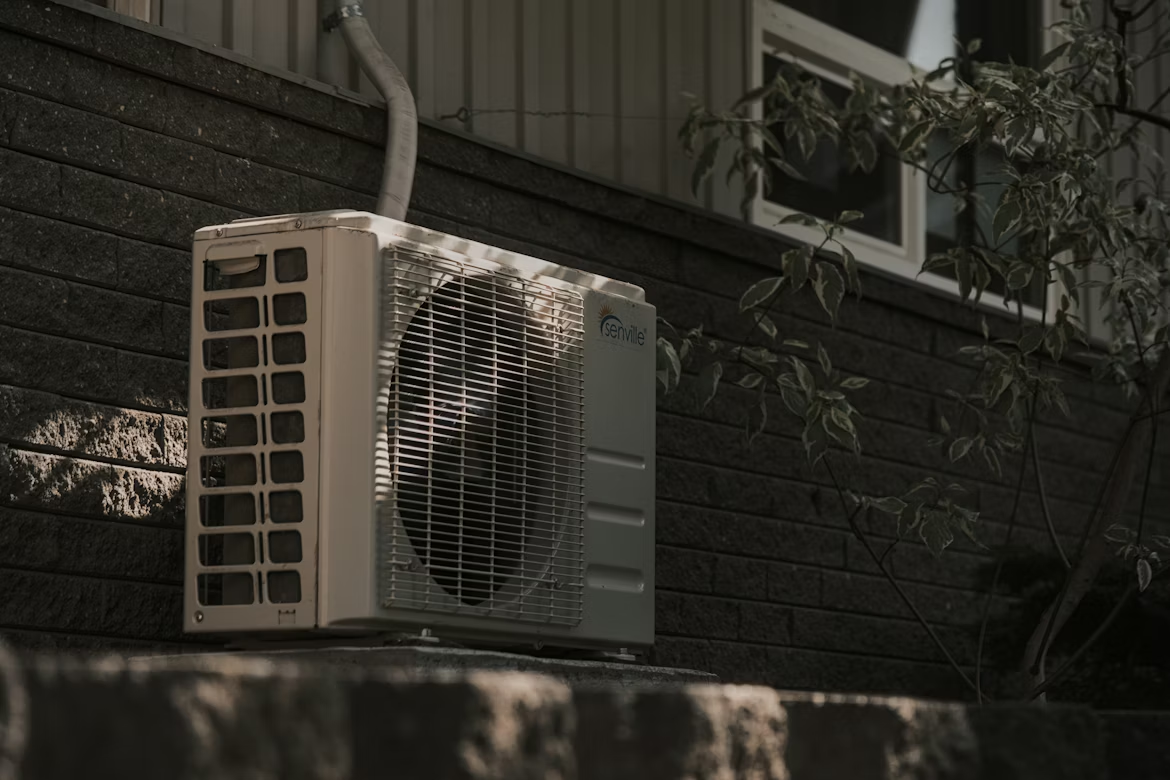
The outdoor unit is expelling heat that it has removed from your home. If coils are coated with grime, grass clippings, or debris – it can’t expel heat efficiently.
This ranks among the most neglected reasons for inefficient cooling. Maintain at least 2 feet of clearance around the outside unit and rinse the coils with a garden hose gently once a season. Never use a pressure washer on those sensitive fins – it does more harm than good.
Thermostat Issues
Before assuming a mechanical failure, always check the thermostat first.
Is it set to “Cool” and not just “Fan”? Are the batteries low? Did you experience a power surge recently? Thermostat issues can often present as major AC issues. Simply resetting your thermostat or changing the batteries can fix what seems like a hefty repair.
DIY vs. When to Call a Pro
Some fixes are fast and free. Others need a licensed HVAC technician.
Handle yourself:
- Filter replacement
- Thermostat reset and battery check
- Clearing debris from the outdoor unit
- Thawing a frozen coil (initial step only)
Call a professional:
- Refrigerant leak diagnosis and recharge
- Recurring frozen coil after filter replacement
- Compressor or capacitor issues
- Any electrical fault within the system
Even though annual preventative maintenance is crucial, only 43% of Americans schedule yearly AC maintenance for their central system. Those who get maintenance done can extend the life of their system by up to 40%.
That is a large window of opportunity. Which is why most overheating events occur right when you need them the least.
The Score at the End of the Day
A cooling problem doesn’t have to mean an expensive repair.
Begin with the simple things – filter, thermostat, outdoor unit. Go down the list. Many AC problems are small at first, then worsen when left alone. That’s why catching it early is how air conditioning repair services can be cheap.
Quick recap:
- Check the air filter before anything else
- Look for ice on the indoor coil or copper lines
- Inspect the outdoor unit for blockages and debris
- Rule out thermostat issues with a quick reset
- Call a professional for leaks, compressor faults, or recurring freezing
Don’t wait until summer dies. Detect early. Repair Quickly.
Frequently Asked Questions
Why is the AC running but not getting cold?
The likely culprits are a dirty filter, low refrigerant caused by a leak, a frozen evaporator coil or a dirty outdoor condenser unit. First things first — check the filter. It’s the easiest fix and is responsible for more cooling problems than any other cause.
Can a dirty filter cause the AC to stop cooling completely?
Correct. If the filter is too clogged airflow is decreased to the point that the evaporator coil will freeze solid. When this happens your AC will not be able to cool until the coil thaws and you replace your filter.
When should professional air conditioning repair services be called?
Whenever basic troubleshooting — filter, thermostat, outdoor unit — fails to bring back cooling comfort, contact a professional for help. Problems with refrigerant leaks, compressors, and electrical components can only be solved by a qualified HVAC technician who has the proper tools and certification to complete the job safely.
