
Rust stains on concrete are the worst! They seem to pop up at the most inopportune times. You may move a flower pot, garden tool or a metal chair and – voila! – there’s an ugly orange or brown stain on your concrete surface. Here’s how to remove rust stains from concrete. Learn how to get your clean concrete surfaces back to looking their best.
So why is it so hard to remove rust stains from concrete? One good reason is that the way concrete and rust interact means that rust stains sink into the concrete surface instead of sitting on the surface as a stain. The texture of the concrete and its porosity allow rust stains to literally take root as a stubborn smudge that looks for all the world as if it has dug itself in to stay permanently. The good news is that with the right combination of effort and treatment these kinds of rust stains aren’t necessarily irreversible.
Rust stains on concrete are quite common and can be quite stubborn. But here are a few different ways to remove them from concrete. Some of the methods use common household items. And a few require commercial stain removers. So here are a few of the ways you can easily get rid of unsightly rust stains on your concrete.
Why Rust Shows Up on Concrete
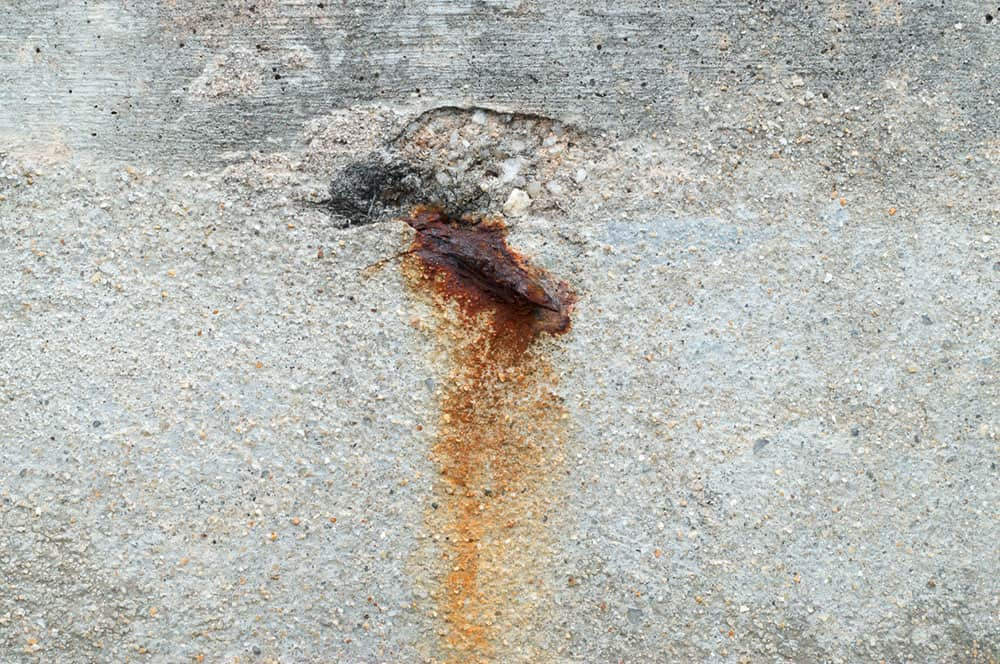
Concrete itself does not rust. Rust is formed on metal objects that contain iron when they are exposed to the elements. Moisture and oxygen combine to form iron oxide, commonly known as rust.
A common occurrence with ferrous metal items such as a chair, tool, bicycle, or planter, is rusting out the legs or points where the metal sits on the concrete. This is a common problem, which arises from rain and high humidity, which develop rust on the metal item. Water with rust in it can seep into the capillary channels of the concrete. As many people know, concrete is a porous material that absorbs water readily, due to the many micro-fine pores contained in the mix.
Once the rust is in the pores it begins to bond with the cement in the concrete. This is why rust stains seem to penetrate deep into the surface of the concrete, as opposed to just sitting on top.
Fresh stains are generally easier to remove from concrete than old stains. A fresh stain has not yet had time to fully penetrate the concrete which can lead to a harder stain over time as water in the stain breaks down the concrete, deepening the stain.
How to Get Rust Out of Clothes: Fast, Safe Home Methods
A Quick Word on Safety
Before you start cleaning, please read the following cleaning tips to get the best results from your cleaning products and to prevent damage to surfaces.
Gloves should be worn when cleaning with chemicals. Some chemicals are acidic which can cause skin abrasions. Clean in a well-ventilated area when cleaning with over-the-counter rust cleaners. Never mix different cleaning chemicals. Some combinations can create dangerous gases.
As with all cleaning solutions, it is always a good idea to test the concrete in an inconspicuous area first. The solution may react differently in various areas of color or texture within the concrete.
Once you’ve taken these precautions, you can begin tackling the stain.
Natural Methods That Often Work Surprisingly Well
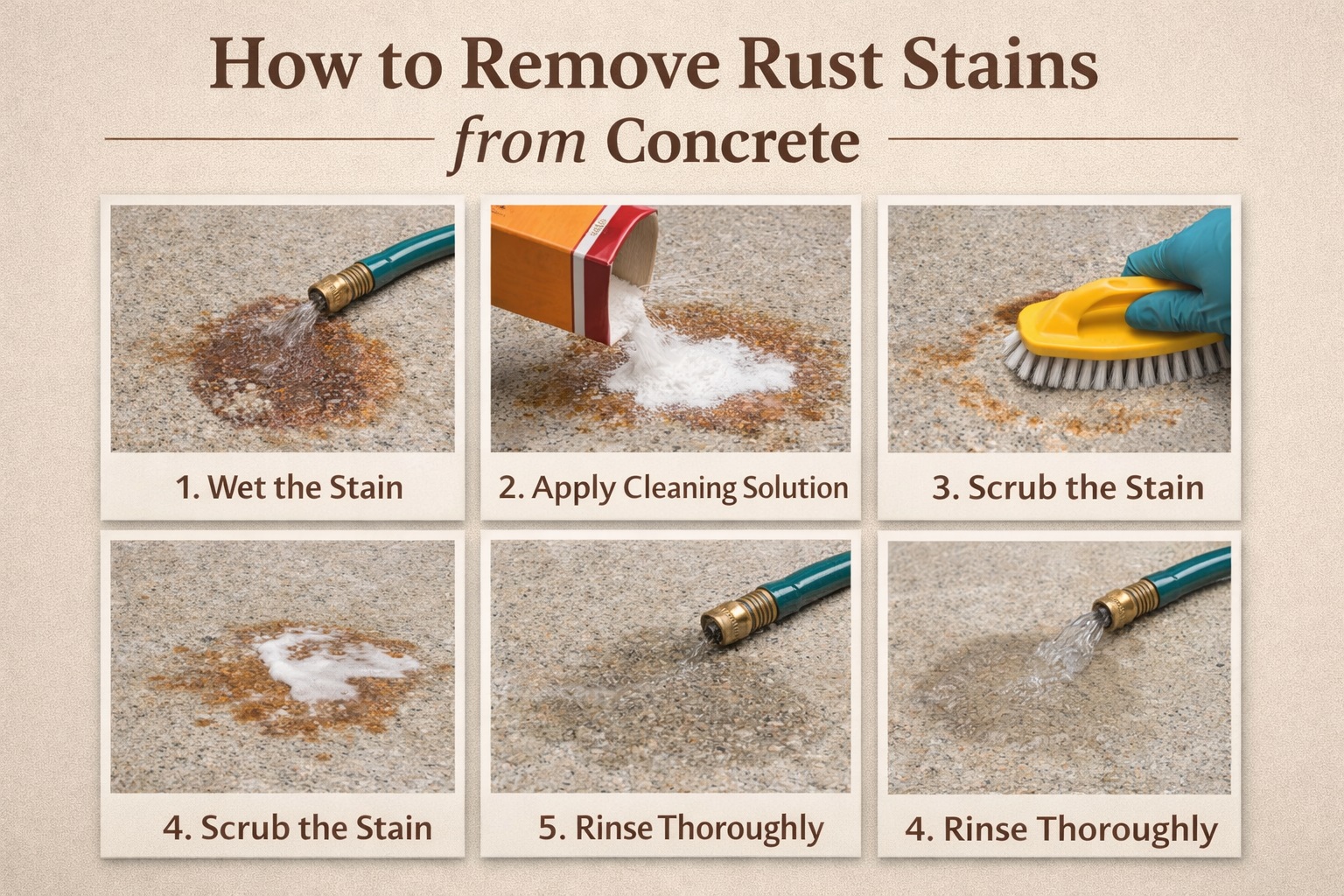
Some people just start out using common household products before graduating to harsher cleaning solutions. Amazingly, they sometimes have some degree of success when attempting to remove rust stains with the products they have on hand.
The most popular method involves the use of lemon juice and salt. Citric acid is found in lemon juice and acts as a rust remover. The salt acts as an abrasive helping to lift the rust stain from the surface.
Yes. Pour lemon juice over salt that you have sprinkled over the rust. Let it stand for 15 to 20 minutes to allow the acid to begin to dissolve the rust. Brush away the mixture using a stiff nylon brush and rinse with water.
Just when you thought you had exhausted all your cleaning supplies the DIYer stumbles upon an answer that works at least some of the time. Most people have vinegar sitting around in their pantry. Some believe that White Vinegar may be effective in some circumstances in reducing and eliminating rust. The acetic acid in vinegar supposedly dissolves the rust. Apply vinegar directly to the rust stain. Allow it to sit for the recommended 15 to 30 minutes so it may do its magic on the rust. Once the desired time has passed, just scrub it clean with plenty of water.
First treatment may remove the bulk of the stain, and may need to be repeated a few times in order to remove remaining stains completely.
In many cases, the most effective treatment method is a mild approach using baking soda paste. By mixing together a small amount of baking soda with water, a thick paste is developed that can be spread across the affected area of the stone. Allow the paste to sit for about twenty minutes, then brush it off and rinse.
While baking soda may not be strong enough to eradicate rust stains that have penetrated deeply into the concrete, it can help to reduce the appearance of rust stains to some degree and is safe for most types of concrete.
It is frequently worthwhile to start with the natural methods. These are generally low in cost, simple to apply and low in potential hazard to the concrete.
Top Warning Signs You Need Kitchen Sink Plumbing Repairs
When Stains Refuse to Budge
Most home remedies do not have the required strength to remove various stains especially those that have been accumulated on the carpet for months or years.
In these types of applications commercial rust removing products for concrete can be very effective. The chemicals in the products react with the iron oxide, lifting it out of the surface of the concrete.
Use commercial cleaners according to the label. Apply it to the affected area and let it sit for the specified time. Rinse thoroughly. Caution: When using strong cleaners, wear gloves and eye protection.
Sometimes we hear people talking about using muriatic acid to remove rust stains from the concrete. Although this strong chemical may be the only way to remove the toughest stains, using acid on the concrete surface should be a last resort action. The acid is far too strong and could end up eating away more of the concrete than the actual stain.
Gradually move from milder cleaning solutions to stronger ones.
The Importance of Patience
The most common mistake made when attempting to remove rust stains from concrete is that they expect the stain to disappear right away. This is rarely the case and rust stains may require multiple applications of several different treatments before they are removed.
Avoid over scrubbing or using too harsh of a cleaner on the concrete surface as this may damage the concrete. A rough or etched surface will actually make your concrete more prone to future staining.
As you probably know, the best way to deal with rust is patience. I cleaned it a little bit using a very mild cleaning solution and just let it sit and work for a bit on a particular area and after a couple of applications the staining had turned quite light and actually disappeared.
Patience is often the key to restoring the concrete without damaging it.
Preventing Rust Stains in the Future
When you have cleaned the stain away you may want to take steps to stop it reoccurring.
Rust Stains From Outdoor Metal Furniture You may be surprised where rust stains come from, but one of the most common culprits are outdoor metal pieces of furniture. In an effort to fight rust, people will often place these items directly on the concrete, which is bad news. Try to keep any large metal items off of the concrete during wet weather and use a protective pad or disc of some sort underneath them if you must leave them outside.
In addition to the surfaces already mentioned, it’s also important to consider any large or unusual pieces of equipment, tools or vehicles which may also cause problems from rust running down them and on to the driveway or garage floor. Although minor drips may not seem a particular problem at the time, they can turn in to quite a significant stain after a while.
Applying a concrete sealer to the surface of the concrete is another option for creating a barrier between the concrete and liquid substances that could cause staining. Sealers work by limiting the capacity of the concrete to absorb liquids, though they will not necessarily stop stains from occurring. Instead they merely make future stains easier to clean.
Rust spots on your car can really be unsightly, but they can also be a major pain if they begin to spread and eat away at the metal on your vehicle. So, here’s a tip to deal with them before they become a much larger issue. The spots are easiest to deal with when they’re fresh, so tackle any new rust you see right away. The longer you let them sit, the harder they’ll be to get rid of.
Final Thoughts
A small area of rust on the surface of a driveway or patio can turn an otherwise well-maintained, clean surface into a sorry- looking, dirty mess. Once you understand how rust forms and the key to removing it, you may not mind the task so much.
There is nothing mystical or mysterious about removing rust stains from concrete and it is not some deep mystery that can only be solved by some “magic” eraser product. Rather, it is simply a matter of using the right procedures, allowing sufficient time for the process to work and being a bit mindful of the condition of the concrete.
Whether you begin with lemon juice and salt or graduate to a commercial rust remover, patience will likely be required. This orange stain on the concrete was apparently there to stay — at least until the concrete needed a good power washing and the stain could be dealt with.
