
Plumbing problems don’t always appear right away. Indeed, in the average residence, plumbing problems tend to manifest themselves slowly through subtle indicators. Thus, a drain may run slower than it once ran, a faucet may need to be tightened more frequently than it once needed to be tightened, or a strange odor may appear without explanation. Such problems may not be significant enough to alter the status quo.
In many cases, homeowners who have issues with their home’s plumbing system have noticed that a number of symptoms have been related to a single cause. As a service provider such as Koala Plumbing has seen, a minor issue has been a cause of a far more complicated and overarching cause. But in all of these cases, it is evident that a problem is not a cause but a symptom.
Understanding the minor plumbing issues that make up the overall picture can help in gaining a deeper insight into the causes of the potential outcomes of delays in addressing them.
Plumbing Systems Deteriorate Silently, Not Spectacularly
Plumbing systems deteriorate slowly. Corrosion happens from the inside out. Gaskets compress and joints move slowly as a building settles. But because water is constantly flowing, there are no obvious signs that indicate that there is a problem.
Furthermore, in old buildings, galvanised steel or copper piping from decades past may not deteriorate in a constant manner. One part of a plumbing system works well, but another part becomes constricted. The irregular deterioration of a plumbing system results in changes in pressure, and changes in pressure result in intermittent leaks or irregular water flow, unrelated to what actually caused a problem in a plumbing system.
Not even new homes are excluded from this rule. Today’s homes, especially if they have high-end plumbing systems, require proper installations and pressure regulation as well. Variations in home construction can result in pressure points appearing in homes many years from now.
Several Minor Repairs May Signal More Serious Issues
When the homeowner decides to address the problems in their plumbing system by themselves by only repairing the problems that are visible to them, they could be unknowingly increasing the lifespan of the failing plumbing system without actually repairing the problems within the plumbing system. This could be achieved through the replacement of washers, resealing of joints, clearing of blockages, etc.
This is an all-too-familiar pattern in drainage issues. This is a common problem in blockages, as a recurring blockage may be addressed many times over without actually dealing with the fact that alignment, root growth, and collapse are at the core of the problem to begin with.
From the viewpoint of systems theory, making many small repairs is not an inconsequential act. The pressure distribution changes in other parts of the system.
Water pressure is probably the least considered of all aspects of the health of this system. Changes in pressure can indicate any of several possible problems.
However, high pressure is generally considered to have a favorable effect; nevertheless, this also causes more fixture and joint wear. Low or inconsistent pressure is often a product of corroded components, blockages, or faulty valves. If there are numerous fixtures in a home, pressure problems will first manifest themselves in certain spots before the homeowner thinks there is a pressure issue.
Pressure behavior is frequently used as a starting point for plumbing professionals who realize it is not about specific problems but about systemic issues.
Drainage Problems Do Not Remain Limited to One Area
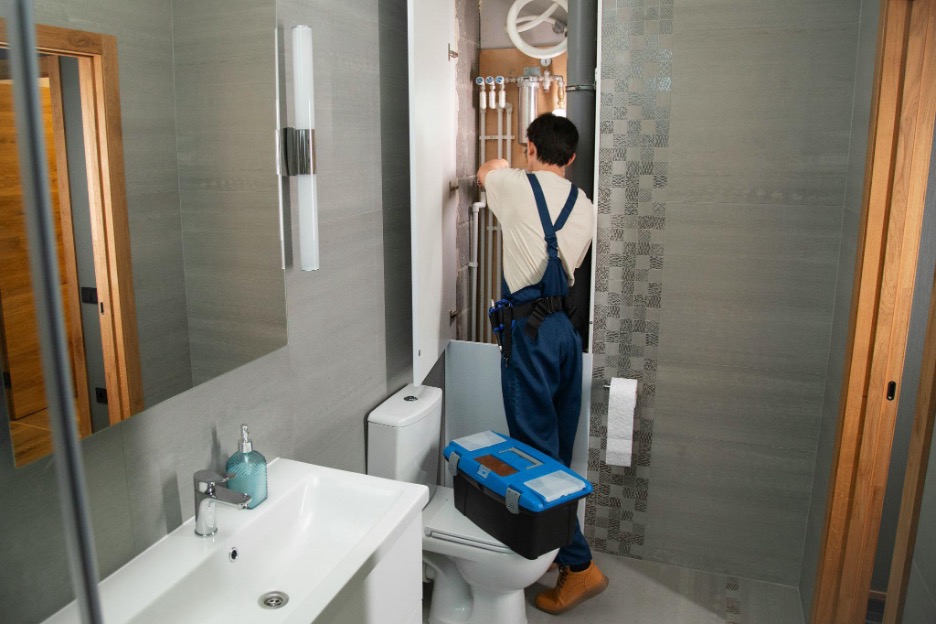
As the drainage system works on the basis of an interconnected pathway, if an area has an issue in the drainage system, the problem can occur elsewhere too. For example, slow draining, gurgling sounds, and bad odors can come from an area that is far away from the actual problem area.
Inadequate venting, partial obstruction, and improper gradients also create problems that could affect multiple drains at once. In the long run, this could increase the risks of backups and water damage.
Moisture as a Long-Term Risk Factor
Even small plumbing issues, such as a small leak, mean that moisture is introduced in areas that were not supposed to experience such a condition. Finally, this moisture will affect the materials and quality of indoor air.
Leaks that are small in size but located under the sink area, behind the wall area, and even under the floor area could go unnoticed for months and even years. In the meantime, these small leakages could also cause the deterioration of the timber used in the area where the leak has occurred and could also cause the corrosion of the fixtures located in the area.
When looking at this in relation to a systems approach to the home, the plumbing system relates directly to how long the home will last in its overall structure. While this might seem to be a minor issue to address in relation to one part of the home, there are implications for other aspects of home maintenance as well.
Compounding Effect of Delay in Repairs
A possible explanation for the escalation of minor plumbing issues is the cumulative nature of plumbing. Each plumbing problem adds stress to another part of the plumbing system.
Rather, it allows things to interact with one another so that future repairs become increasingly complicated. A weakened pipe because of rust becomes more susceptible to pressure surges. A clog-prone drain becomes more susceptible to failure because of increased usage.
Such compounding creates a foundation upon which to understand why a plumbing problem might seem to “suddenly” worsen over long timeframes in which stability has been the norm.
Why Early Assessment Matters More Than Immediate Repair
There is a big difference between fixing the symptom and evaluating the system. The former is a pressing task, while evaluating the system is of more importance and is based upon understanding what is behind the problem and if there are similar situations elsewhere in the system too.
It has to be mentioned that early assessment does not necessarily imply immediate large-scale works. Early assessment in some instances has enabled homeowners to make informed decisions on how to plan and execute works proactively and not reactively. This has primarily been possible by understanding when certain parts of a system are nearing their lifecycle.
Recognising Patterns Instead of Isolated Events
Maybe the best change in mindset that homeowners should be encouraged to adopt is that of moving away from event-thinking and moving into pattern-thinking. The leak itself is not really a problem. It is probable that several minor problems in different fixtures all signal some underlying problem.
